
Last updated September 10, 2026
Full 25-point door and opener safety check with every visit - springs, cables, rollers, tracks, and your LiftMaster or Chamberlain opener included
You get a price before we start. It does not change when the truck arrives.
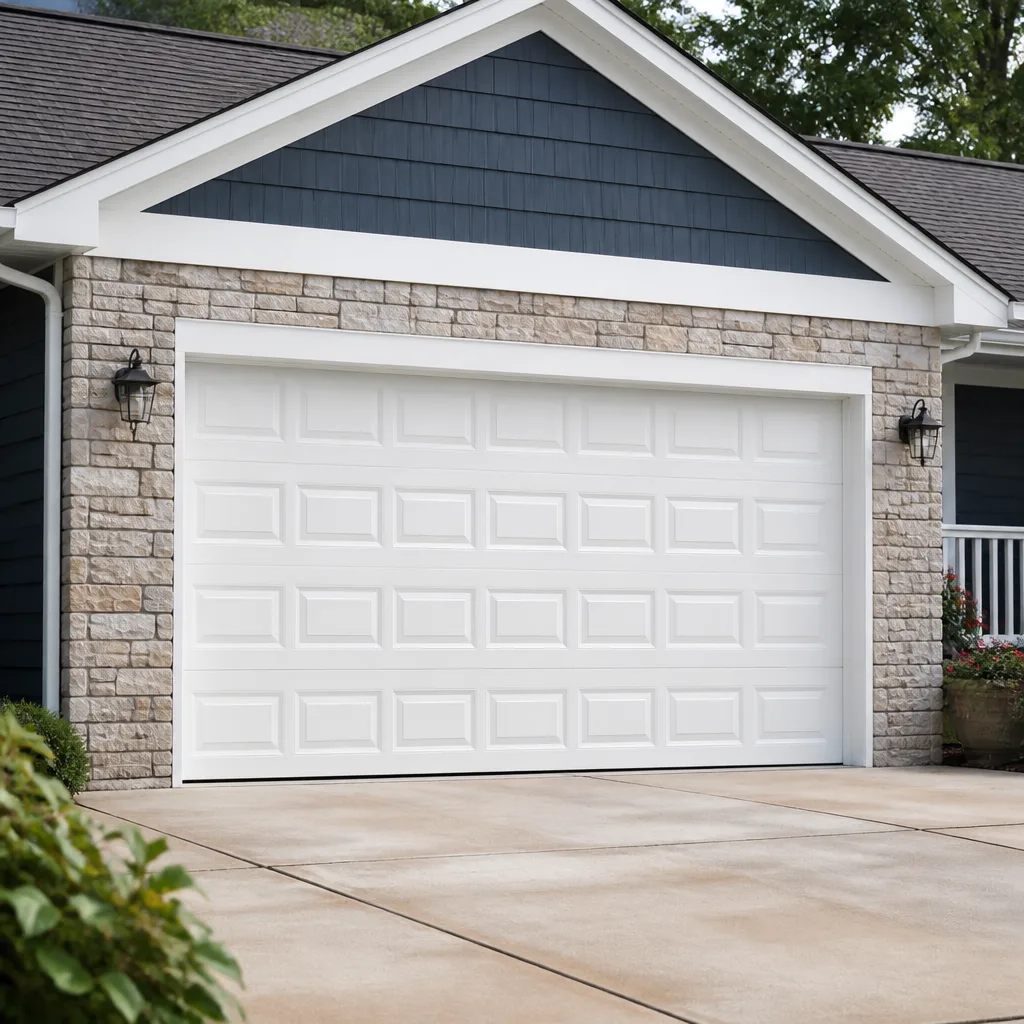
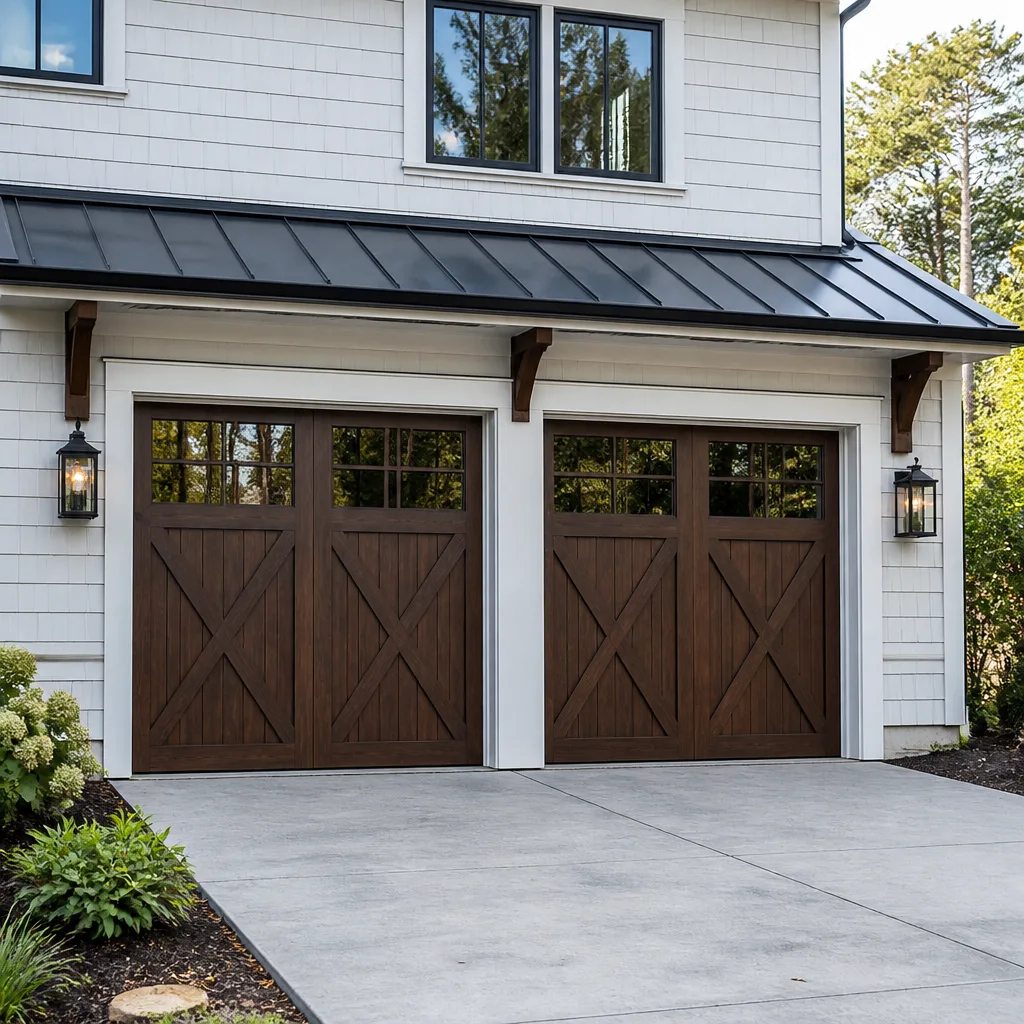
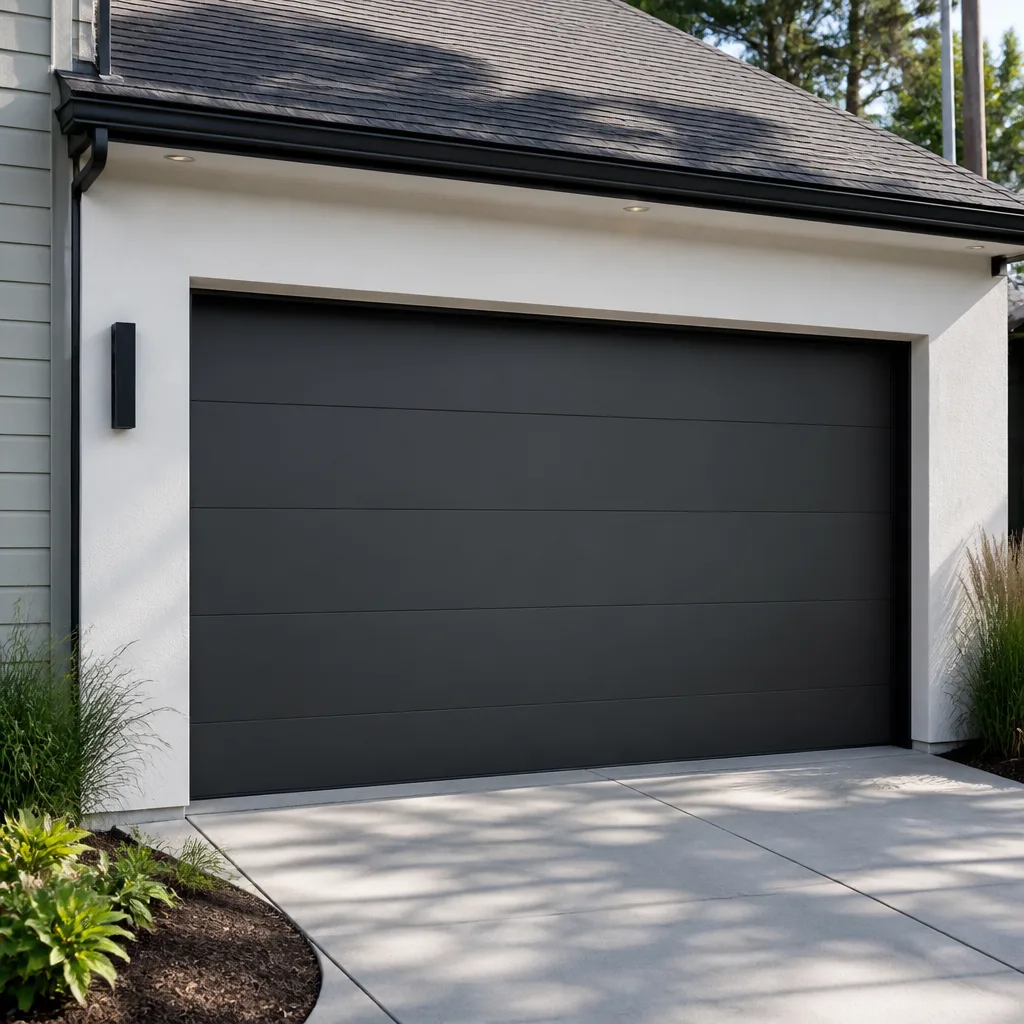
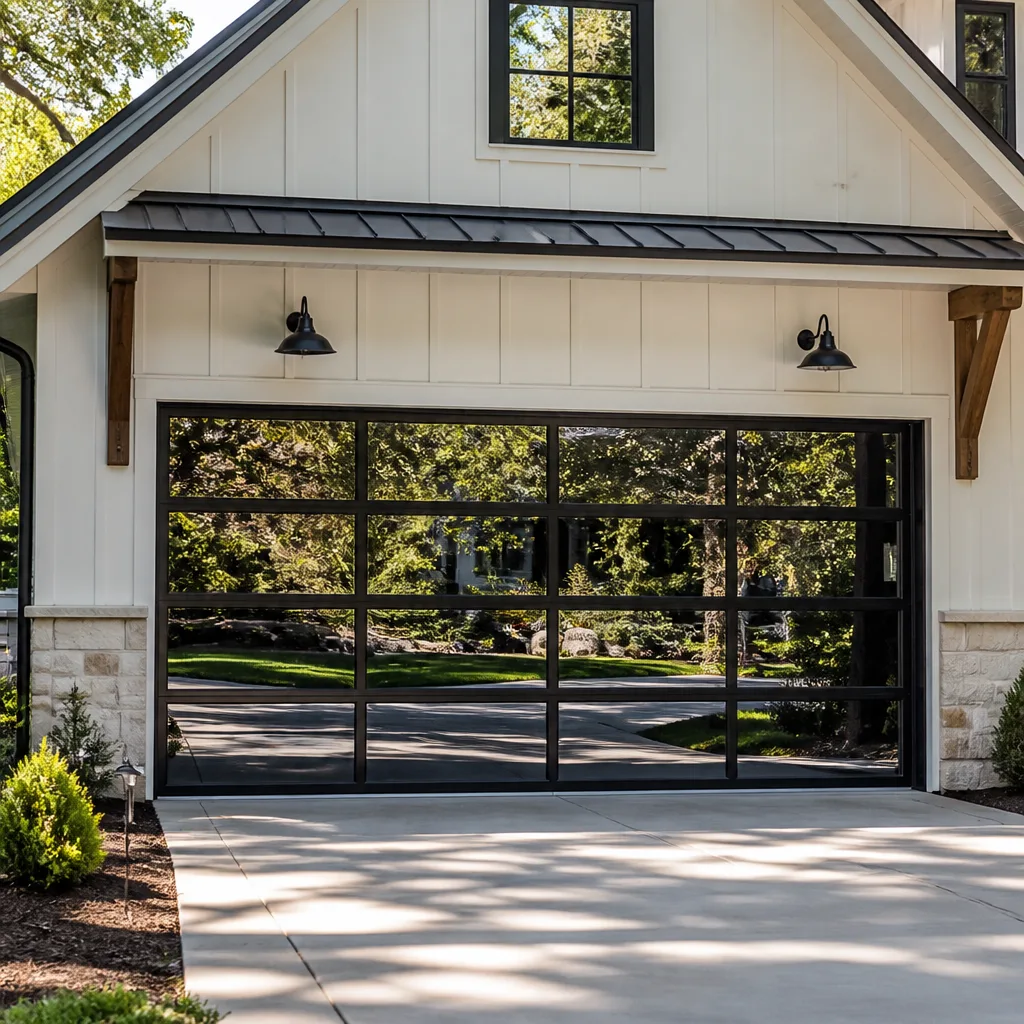
 Before
 After
After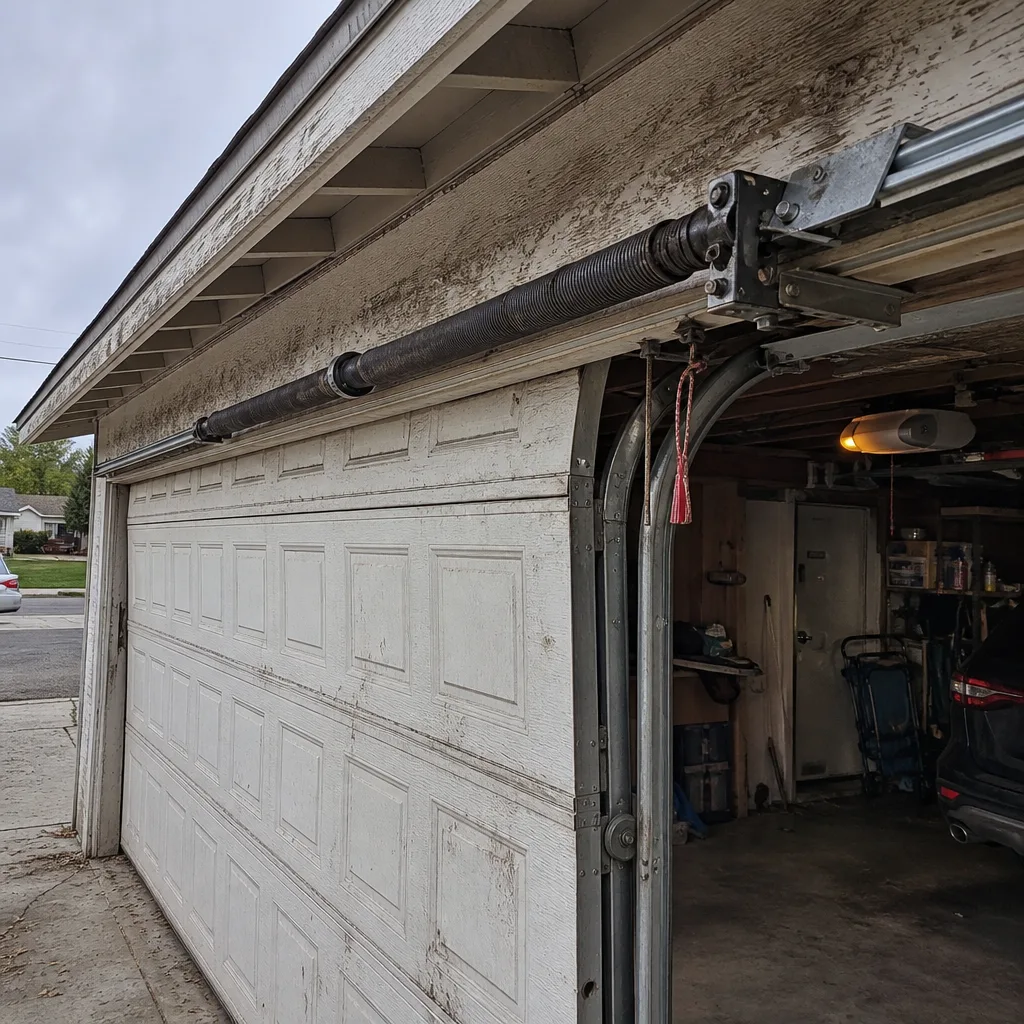 Before
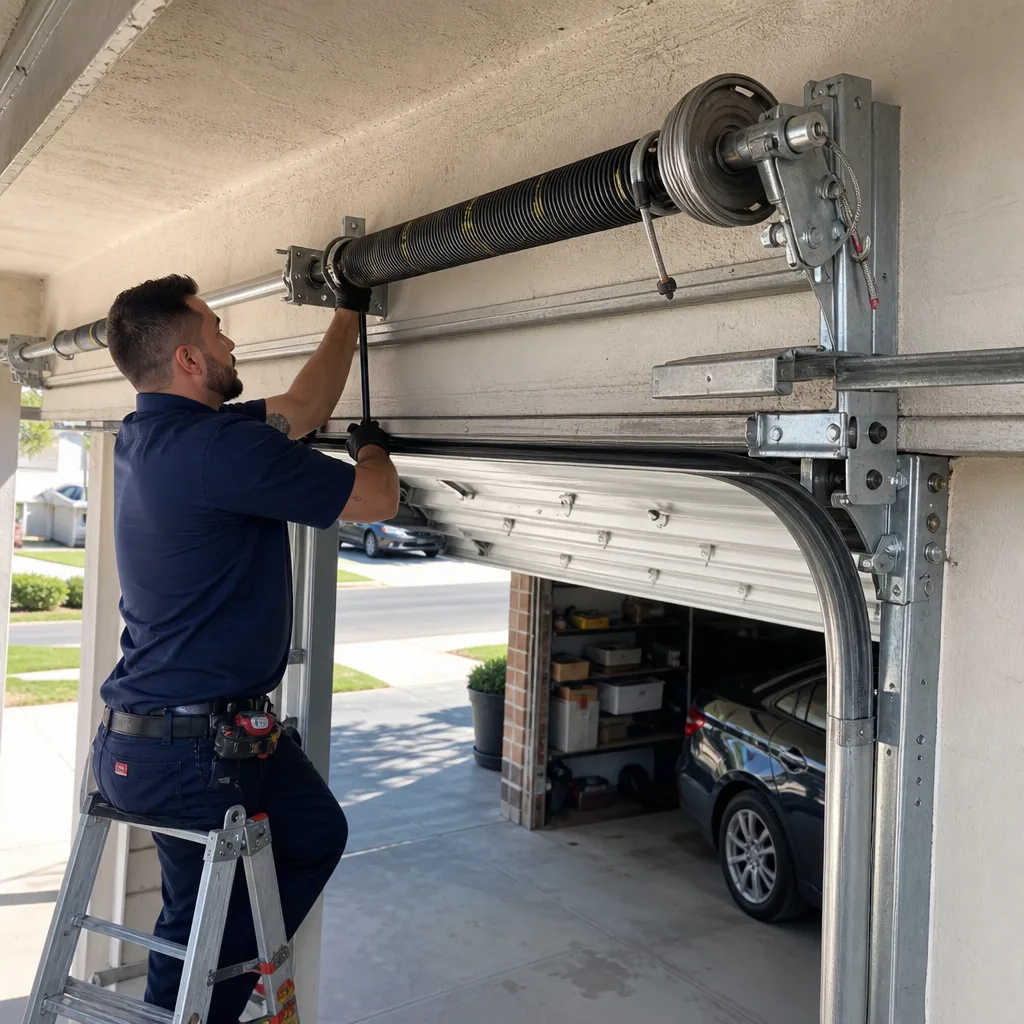 After
After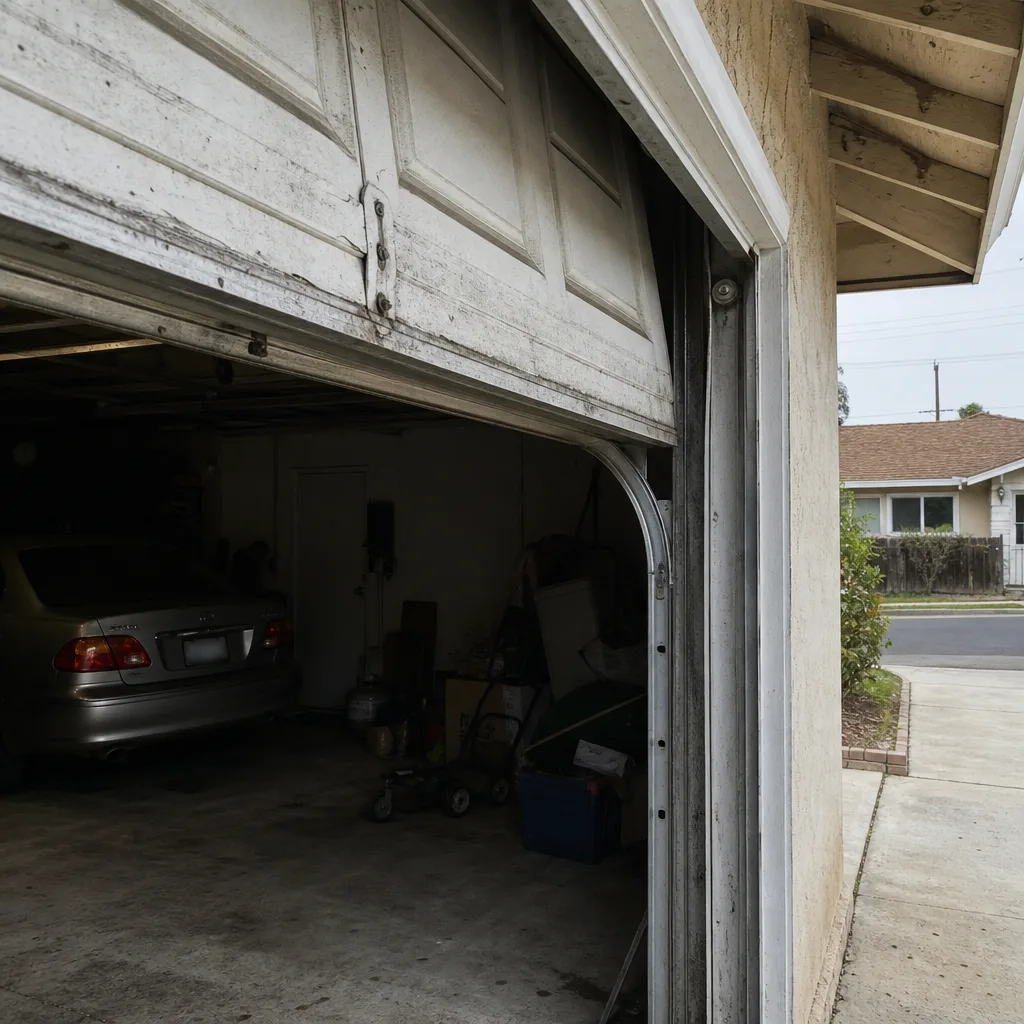 Before
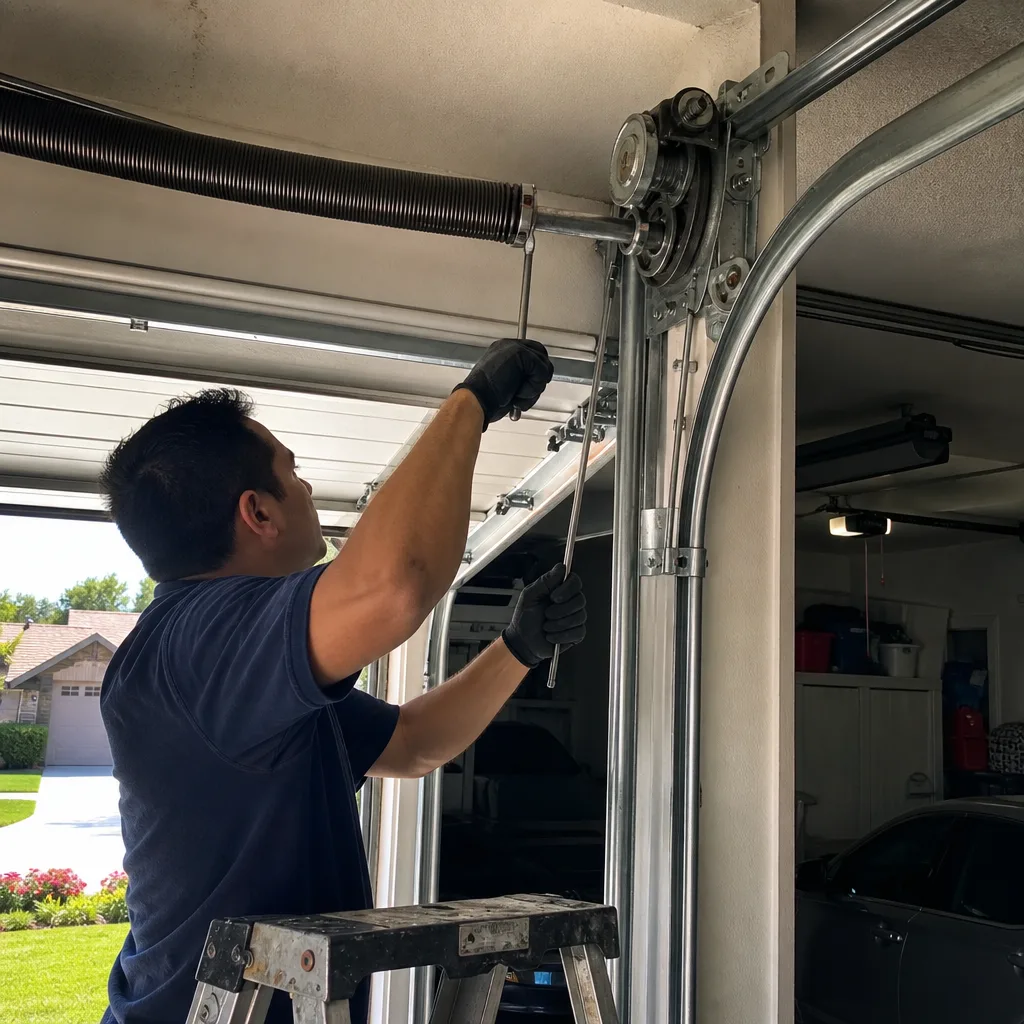 After
AfterDIY vs Professional Garage Door: The Anaheim Homeowner’s Decision Guide
Torsion spring replacement sends roughly 30,000 Americans to emergency rooms every year. The injury is not a matter of skill or careful planning. It is physics. A standard garage door torsion spring stores enough rotational energy to lift 150 to 400 pounds of door weight, and that energy releases in a fraction of a second when a winding bar slips or a cable breaks free. In Anaheim, where many homes built during the 1960s through 1980s still run original hardware, we see the aftermath regularly. This guide maps exactly which garage door tasks belong in a homeowner’s hands and which ones do not, what honest savings look like in our local market, and how to tell whether your own toolbox and temperament match the job. For Garage Door Repair Maintenance Checklist for Anaheim Homeowners and more guides & resources, see our blog.
Quick Answer
Most Anaheim homeowners can safely handle lubrication, weatherstripping replacement, safety sensor realignment, and remote programming. Torsion spring replacement, cable repair, door panel structural work, and opener rail mounting require a trained technician. The break-even point on DIY savings is roughly $80 to $150 for safe tasks; professional repair for dangerous components typically runs $180 to $450 in Anaheim and includes warranty protection that homeowner work cannot match. See our Garage Door Cost Breakdown: The Anaheim Homeowner’s Reference for 2026 for detailed pricing.
Table of Contents
- What Makes Garage Doors Dangerous: The Physics Homeowners Underestimate
- Safe DIY Tasks: The Homeowner’s Ceiling
- Professional-Only Work: Where the Line Is Hard
- Honest Cost Comparison: Anaheim DIY vs. Pro Pricing
- California Contractor Law and Your Liability
- The Hidden Costs of a Failed DIY Attempt
- The Tool and Knowledge Floor: Can You Actually Do This?
- When to Call a Professional
What Makes Garage Doors Dangerous: The Physics Homeowners Underestimate
A garage door is the largest moving object in most homes. It is also one of the most heavily loaded. The torsion spring above the door header does not assist the opener. It does the lifting. The opener merely guides the door along the track and provides the final few inches of travel. When the spring breaks, the door weighs its full dead load, anywhere from 130 pounds for a single steel door to over 350 pounds for an insulated double-wide.
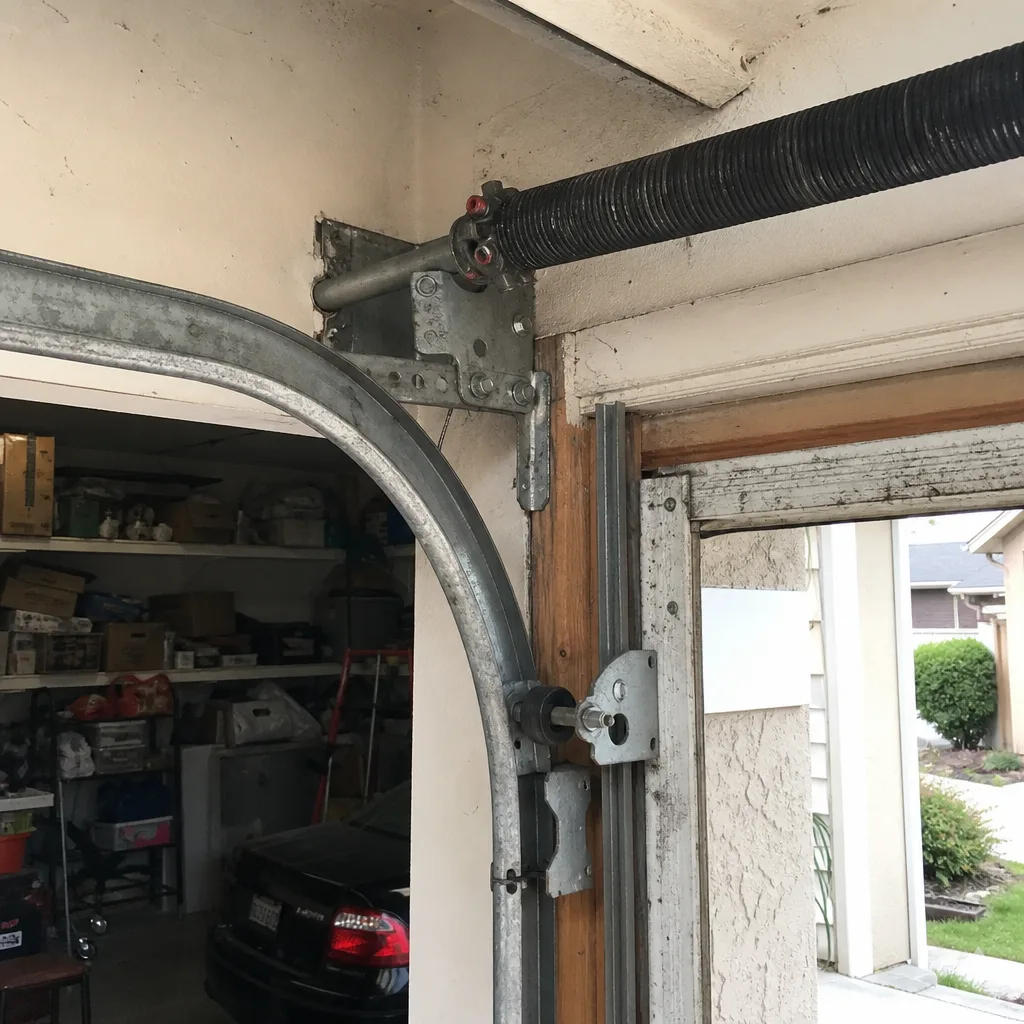
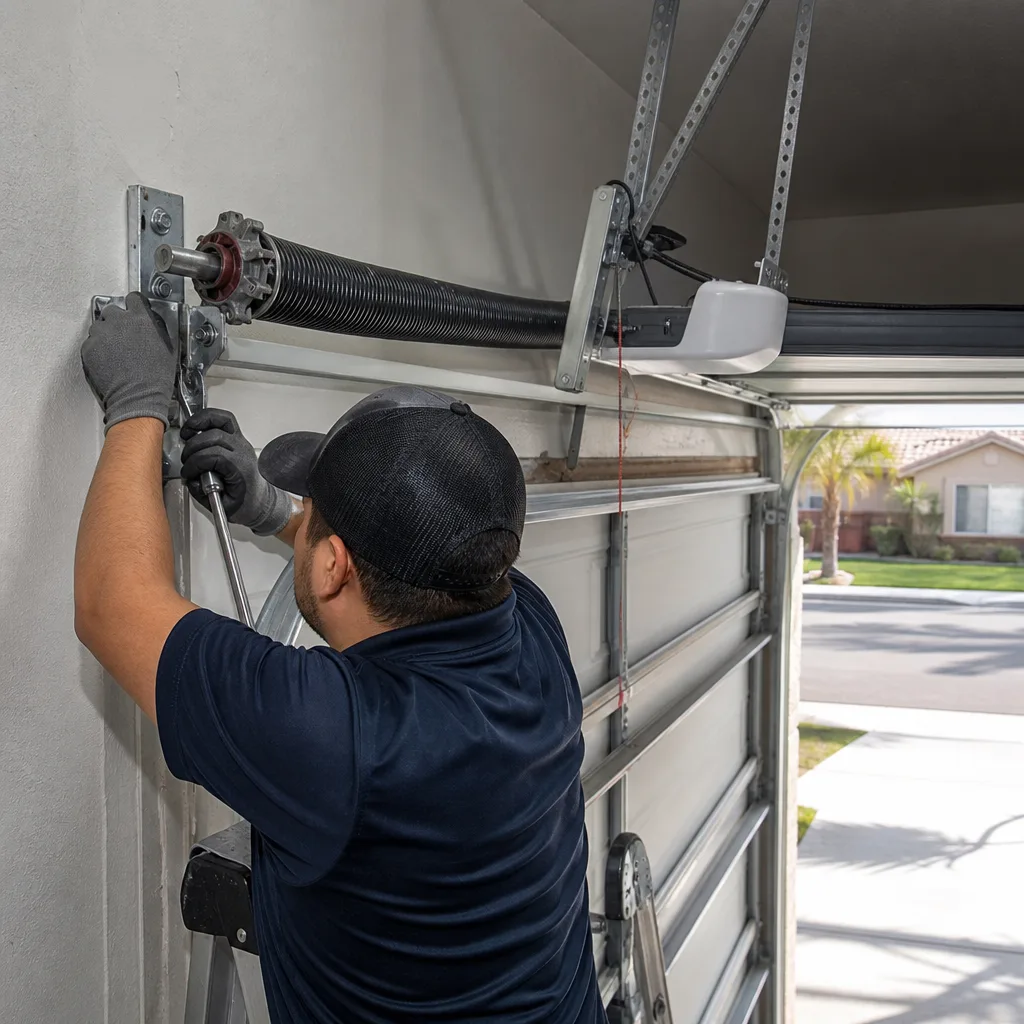
The danger is stored mechanical energy, not electrical shock. A wound torsion spring contains roughly 1,000 to 2,000 inch-pounds of torque. Winding bars must be inserted into the cogs of the winding cone while tension is held and released in quarter-turn increments. If a bar is not fully seated, or if the wrong tool is substituted, the cone can spin and the bar becomes a projectile. We have seen broken wrists, facial fractures, and lacerations requiring surgical repair. The emergency rooms at St. Joseph Hospital and Anaheim Global Medical Center document these injuries year-round.
Extension springs, common on older single-car doors in the Anaheim Colony Historic District and parts of West Anaheim, carry less energy per spring but present a different hazard. When they break, they can whip through the garage. A safety cable threaded through the spring prevents this, but many original installations lack this feature.
The opener rail and trolley system is less dramatic but still hazardous. A 7-foot rail under spring-assisted load can bow or detach from the header bracket if the mounting surface is compromised. Homeowners standing on ladders to adjust or remove opener hardware are working overhead with both hands occupied, often on uneven garage floors.
Even door panel replacement involves risk. Modern steel and aluminum panels are light but awkward. Older wood doors in the Eichler-influenced neighborhoods near The Anaheim Hills can weigh 80 pounds per panel. A dropped panel damages the door, the car, or the person below it.
The rule we apply in our shop is simple: if the repair requires releasing or applying tension to a spring, or if it requires working overhead with both hands while standing on a ladder, it belongs to a technician with proper tools and insurance.
Safe DIY Tasks: The Homeowner’s Ceiling
There is meaningful work a competent homeowner can do. It saves money, extends component life, and keeps the door running quietly. These tasks share three traits: no stored energy to manage, no overhead work on ladders, and no structural modification.
Lubrication and Basic Maintenance
Annual lubrication is the single most cost-effective maintenance a homeowner performs. Use a silicone-based spray or white lithium grease on the hinges, rollers, and bearing plates. Avoid WD-40 as a lubricant; it is a solvent that strips existing grease. In Anaheim’s dry, warm climate, lubricant evaporates faster than in coastal zones. We recommend twice-yearly service for homes east of the 57 freeway where summer temperatures regularly exceed 95 degrees.
- Close the door and disconnect the opener by pulling the red release handle.
- Inspect rollers for cracks or flat spots. Nylon rollers show wear as flattened treads; steel rollers develop rust.
- Apply lubricant to each hinge pivot point. Wipe excess; accumulated grease attracts dust.
- Lubricate the bearing plates at each end of the spring shaft. Do not touch the spring itself.
- Run the door manually through two full cycles to distribute lubricant.
- Reconnect the opener and test safety reversal.
Expected cost: $12 to $18 for a can of proper lubricant. Time: 30 to 45 minutes. Professional tune-up in Anaheim: $89, which includes spring tension check, track alignment, and safety testing that homeowners cannot replicate.
Weatherstripping Replacement
The vinyl or rubber seal at the door bottom and the stop molding along the jambs deteriorates in Anaheim’s UV exposure. Replacement is straightforward. Measure the width of the door, purchase a compatible seal (Clopay and Wayne Dalton use different retainer profiles), and slide or clip the new seal into place. No tools beyond a utility knife and possibly a flathead screwdriver are required.
Cost: $25 to $65 for material. Professional installation: $120 to $180 including trip charge.
Safety Sensor Realignment
Photo-eye sensors mounted 4 to 6 inches above the floor on each track must face each other squarely. When the LED on one sensor glows steadily and the other blinks or stays dark, alignment is lost. Loosen the wing nut, pivot the sensor until both LEDs glow steady, and retighten. Clean lenses with a soft cloth; spider webs and dust are common causes of phantom obstruction in Anaheim’s dry season.
Cost: $0. Professional call: $150 to $200 minimum.
Remote and Keypad Programming
Every major manufacturer publishes programming instructions. LiftMaster and Chamberlain units use a purple, yellow, or orange learn button depending on radio frequency. Genie systems use an Intellicode button. The process takes under five minutes and requires no tools.
Cost: $0. Professional call: $125 to $175.
Cosmetic Hardware Replacement
Decorative handles, strap hinges, and faux hardware on carriage-house style doors attach with simple screws. This is purely aesthetic and carries zero mechanical risk.
These five categories define the safe ceiling. Anything beyond them enters territory where the savings are real but the downside is disproportionate.
Professional-Only Work: Where the Line Is Hard
Some tasks are not borderline. They are not “advanced DIY.” They are trades work with a genuine hazard profile that homeowner insurance may not cover if self-performed incorrectly.
Torsion Spring Replacement
This is non-negotiable. The winding bars must be solid steel, precisely sized to the winding cone diameter. The vise grips used to hold the cable drum must be rated for the load. The technician must know how to calculate spring wire size, inner diameter, and length to match the door weight. An incorrect spring fails prematurely or damages the opener.
In Anaheim, we see two common DIY failure modes: the homeowner uses a screwdriver or pliers in place of winding bars, or they install a spring with the wrong IPPT (inch-pounds per turn) rating. The first causes injury. The second causes the door to run heavy, burning out the opener within months.
Professional torsion spring replacement in Anaheim: $220 to $380 for a standard residential door. This includes the correct spring, winding, balance adjustment, and safety testing.
Cable Replacement
Cables wind and unwind on the cable drums as the door travels. When a cable frays or breaks, the door goes out of level and the remaining cable carries double load. Replacing a cable requires releasing spring tension first, which returns us to the torsion hazard. Even extension spring cables require knowledge of how to secure the spring safely during replacement.
Track Alignment and Replacement
Vertical and horizontal tracks must be parallel within 1/4 inch and plumb within 1/8 inch. A bent track from vehicle contact or a failed roller derails the door. Straightening or replacing track without understanding how the door weight distributes across the hardware causes binding, premature wear, or catastrophic derailment.
Opener Rail and Header Bracket Installation
New opener installation requires a solid header mount, often into engineered lumber or a properly backed drywall surface. The rail must be level and the chain or belt tensioned to manufacturer specification. Incorrect installation stresses the opener gearbox and voids the warranty. In Anaheim, we are factory-familiar with all major brands including LiftMaster, Chamberlain, Genie, Craftsman, and Raynor, and each has specific mounting requirements.
Panel Structural Repair or Replacement
Steel panels with impact damage, delamination, or rust-through compromise door rigidity. A replacement panel must match the original gauge, profile, and insulation value. Mismatching panels causes tracking problems and weather seal gaps. For doors over 15 years old, manufacturers often discontinue panel designs, making full door replacement the practical option.
Bottom Bracket Replacement
The bottom brackets attach the lifting cables to the door. They are under spring tension at all times. Removing a bottom bracket without securing the cable is equivalent to releasing a loaded spring.
These six categories share a common thread: they involve forces the homeowner cannot safely control with household tools, and they carry liability consequences if performed incorrectly.
Honest Cost Comparison: Anaheim DIY vs. Pro Pricing
The savings question deserves a straight answer. Here is what honest DIY looks like in Anaheim’s market, with parts sourced from local suppliers or reputable online vendors, not the cheapest listing on an auction site.
| Task | DIY Parts Cost | Professional Cost (Anaheim) | Net DIY Savings | Risk Level |
|---|---|---|---|---|
| Annual lubrication | $12 - $18 | $89 (tune-up) | $71 - $77 | None |
| Weatherstripping replacement | $25 - $65 | $120 - $180 | $55 - $155 | Minimal |
| Safety sensor realignment | $0 | $150 - $200 | $150 - $200 | None |
| Remote/keypad programming | $0 | $125 - $175 | $125 - $175 | None |
| Roller replacement (10 rollers) | $40 - $90 | $200 - $280 | $110 - $240 | Low |
| Torsion spring replacement | $60 - $120 | $220 - $380 | $100 - $320 | Severe injury risk |
| Cable replacement (pair) | $25 - $50 | $180 - $260 | $130 - $235 | High injury risk |
| Opener installation | $250 - $550 (unit) | $450 - $850 (installed) | $100 - $400 | Moderate (warranty void) |
| Full door replacement | $800 - $2,200 (door only) | $1,400 - $3,500 (installed) | $300 - $1,300 | High (structural, code) |
The pattern is clear. Safe DIY tasks yield modest but real savings, $55 to $200. Dangerous tasks show larger dollar gaps, but the savings evaporate if the homeowner lacks the correct tools, orders wrong parts, or sustains any injury. A single emergency room visit averages $1,400 in Orange County. A failed spring installation that damages the opener adds $300 to $600 in replacement cost.
For parts sourcing in Anaheim, we direct homeowners to Anaheim Door & Window Supply on East Ball Road or Orange County Garage Door Parts in nearby Santa Ana. Both stock common rollers, hinges, and weatherstripping. For springs, we strongly advise against self-ordering. Spring specifications require door weight, drum type, and track radius measurements that most homeowners do not know how to take.
Our standing offer of $50 off any repair over $250 narrows the gap further on professional work. The senior and veteran 5% discount applies as well.
California Contractor Law and Your Liability
California Business and Professions Code Section 7048 requires a contractor license for any construction project, including garage door installation, valued at $500 or more in combined labor and materials. This is not a suggestion. It is a threshold with legal consequences. For full details, read Garage Door Permits, Codes & Inspections in CA: What You Need to Know.
The law matters at two points: during the work and at sale.
During the work, an unlicensed homeowner performing structural modifications assumes full liability for injury or property damage. Homeowner’s insurance policies contain exclusions for unlicensed construction work. If a self-installed door falls and damages a vehicle, or worse, injures a person, the insurer may deny the claim. The homeowner becomes personally liable.
At sale, California Civil Code Section 1102 requires disclosure of unpermitted structural work. A garage door is a structural component of the dwelling envelope. If the homeowner performed installation or major modification without a permit, the disclosure obligation triggers. Failure to disclose exposes the seller to post-sale litigation. In Anaheim’s active real estate market, where homes in the Anaheim Hills and Platinum Triangle trade frequently, this is not theoretical. Buyers’ inspectors flag door hardware, opener mounting, and track installation. Unpermitted work becomes a negotiation point or deal contingency.
Permit requirements vary by municipality. The City of Anaheim Building Division requires permits for new door installation when the opening is modified or when an electric opener is installed in a previously unpowered location. Simple replacement of an existing door in the same opening may not require permit, but the safe course is to confirm with the building division at (714) 782-0297.
Professional garage door installation in Anaheim includes permit handling as standard practice. The contractor carries liability insurance and workers’ compensation. The homeowner’s exposure is zero.
The Hidden Costs of a Failed DIY Attempt
The sticker price of parts is not the total cost. We have rebuilt enough failed DIY jobs to know the pattern. The homeowner saves $200 on labor, spends it three times over on the back end.
Diagnostic Time and Multiple Parts Orders
Garage door symptoms mislead. A door that reverses before closing might have a sensor issue, a broken spring, a binding track, or an opener force setting out of specification. The homeowner replaces the sensors, then the opener, then discovers the spring was the problem all along. Each wrong part order costs shipping, restocking fees, and delay. In our experience, the average failed DIY diagnostic cycle adds 10 to 14 days and $150 to $400 in unnecessary parts.
The “Rescue Premium”
Some contractors, not us, charge a premium to correct amateur work. The logic is sound from their perspective: they cannot warranty work built on an unknown foundation, and they must spend additional time diagnosing what was altered. Premiums of 25% to 50% above standard rates are common for rescue calls. We do not surcharge, but we do charge for the full diagnostic and correction time required.
Secondary Damage
A door run with an incorrect spring overworks the opener. A door with mismatched cables racks the panel sections. A track forced into alignment with the wrong hardware cracks the mounting surface. Each of these converts a $250 repair into a $900 replacement.
Opportunity Cost
The homeowner’s time has value. A professional repair takes 90 minutes. A DIY repair, including research, parts sourcing, and execution, consumes 4 to 8 hours. At any reasonable valuation of time, the savings diminish.
In Anaheim’s climate, a door left inoperable for two weeks during a failed DIY attempt exposes the garage contents to dust, heat, and in winter, occasional rain intrusion. For homeowners using the garage as workshop or storage, this is a real cost.
The Tool and Knowledge Floor: Can You Actually Do This?
Honest self-assessment prevents most DIY failures. Before attempting any garage door work, verify you meet these minimums. Browse our more guides & resources to keep learning.
Tools Required for Safe DIY Tasks
- Silicone-based lubricant or white lithium grease
- Clean rags
- Utility knife
- Flathead and Phillips screwdrivers
- Adjustable wrench
- Level (2-foot)
- Step stool, not a ladder, for sensor work
Tools Required for Professional-Grade Work
- Solid steel winding bars, 1/2-inch or 7/16-inch diameter, 18 inches long
- Two heavy-duty vise grips
- Winding bar holder or second set of hands
- Torque wrench for proper spring tension
- Cable puller
- Proper ladder rated for the user’s weight plus tools
- Safety glasses rated for impact
The winding bars are the critical item. We have seen homeowners use screwdriver shafts, socket extensions, and rebar. All are wrong. A screwdriver shaft is hardened but brittle; it can snap. Socket extensions are too short for proper leverage. Rebar is too soft and bends under load. Only solid steel bars of the correct diameter, inserted fully into the winding cone, are acceptable. They cost $25 to $40. If you do not own them and will not use them again, the investment is poor economics.
Knowledge Self-Assessment
Answer these honestly:
- Can you weigh your garage door accurately using a bathroom scale and the known weight of a known object for calibration?
- Do you know your spring’s wire size, inner diameter, and length, and can you measure each without removing the spring?
- Can you identify whether your door uses standard-lift, high-lift, or vertical-lift track geometry?
- Do you know the manufacturer’s specified spring cycle life, and can you calculate whether a replacement spring meets or exceeds it?
- Can you test and adjust opener force settings using the control panel procedures for your specific model?
Three or more “no” answers means the task exceeds your current knowledge. That is not a failure. It is information. A competent homeowner knows when to stop.
In our 42 years, the customers we respect most are the ones who call before attempting the work. They describe the symptom, we diagnose over the phone when possible, and we schedule a technician if needed. No charge for the call. No shame in the question.
When to Call a Professional
Call when the door makes a loud bang and then hangs crooked. Call when the opener runs but the door does not move. Call when a cable is frayed, a spring is gapped, or a panel is cracked. Call when you have attempted the safe tasks and the problem persists. Call when you are uncertain which category your problem falls into.
Mainspring Garage Door Co. offers free estimates in Anaheim. A technician arrives with the right parts on the truck, states the flat price before any work begins, and finishes most jobs in a single visit. Our 90-Day Done Right Promise covers every completed job in writing. If it is not right, we come back. No paperwork, no arguing.
We answer the phone live, 24 hours a day, including nights, weekends, and holidays. No phone trees. No voicemail. No after-hours answering service.
Call (714) 782-0297 for a free estimate or second opinion on any written estimate.
Common Mistakes to Avoid
- Using the wrong lubricant. WD-40 is a solvent, not a lubricant. It strips grease and attracts dust. In Anaheim’s dry climate, this accelerates hinge and roller wear. Use silicone spray or white lithium grease only.
- Ignoring spring age. Torsion springs have a rated cycle life, typically 10,000 cycles. A door used four times daily reaches this in seven years. Homeowners in Anaheim’s older neighborhoods like West Anaheim and the Colony often run springs past 15 years. The failure is sudden and violent.
- Replacing the opener when the spring is the problem. A broken spring makes the door feel heavy. The opener strains, reverses, or fails. Replacing the opener does not fix the root cause and voids the new opener’s warranty.
- Ordering springs by door size alone. Spring selection requires door weight, track radius, drum type, and desired cycle life. A spring for a 16×7 foot door might be correct for 150 pounds or 250 pounds depending on construction. Wrong springs fail early and damage hardware.
- Working alone on overhead components. Even safe tasks become dangerous without someone to steady the ladder or call for help. The garage is an isolated space. A homeowner knocked unconscious by a falling panel or tool has no automatic rescue.
- Neglecting permit requirements for installation. Unpermitted structural work in Anaheim creates disclosure obligations at sale and potential insurance denial if damage occurs. The permit fee is minor compared to these consequences.
Frequently Asked Questions
Standard repairs in Anaheim range from $150 for sensor realignment to $380 for torsion spring replacement. Opener repairs typically run $180 to $320. Full door replacement starts around $1,400 installed for a quality steel door. Mainspring provides upfront flat pricing before any work begins, and we offer $50 off any repair over $250. Call (714) 782-0297 for an exact quote on your specific door.
You should not. Torsion spring replacement requires specialized winding bars, knowledge of door weight and spring specification, and physical control of stored energy exceeding 1,000 inch-pounds. The injury risk is severe and immediate, not gradual. Professional spring replacement in Anaheim costs $220 to $380 and includes warranty protection that homeowner work cannot provide. We recommend calling a trained technician.
No. At Mainspring, the flat price is stated before any work begins. We diagnose, quote, and wait for your approval. There are no surprises on the bill. If we discover additional issues during the repair, we stop and explain before proceeding. This is our standard practice on every job, in writing.
Yes. Our technicians arrive with springs, cables, rollers, hinges, and openers for all major brands including Amarr, Wayne Dalton, Craftsman, and Raynor. Most repairs are completed in a single visit with no waiting for parts and no second trip charge. This is standard on every dispatch.
If the task requires no tools beyond lubricant, a screwdriver, and a step stool, and involves no stored spring tension or overhead work on a ladder, it is likely safe. Lubrication, weatherstripping, sensor alignment, and remote programming qualify. Anything involving springs, cables, tracks, or opener mounting does not. When uncertain, call for guidance. We diagnose over the phone at no charge.
Yes, for any project valued at $500 or more in combined labor and materials. This includes new door installation and structural modification. Unlicensed work exposes the homeowner to liability, potential insurance denial, and mandatory disclosure at property sale. Professional contractors carry liability insurance and workers’ compensation, and they handle permit requirements. In Anaheim, confirm permit needs with the City Building Division at (714) 782-0297.
The Bottom Line
The DIY versus professional question for garage doors is not about capability or courage. It is about matching the right work to the right hands. Lubrication, weatherstripping, sensors, and remotes belong to the homeowner. They save $50 to $200 and carry minimal risk. Springs, cables, tracks, and structural installation belong to trained technicians with proper tools, insurance, and warranty backing. The dollar savings on dangerous DIY are real but fragile; one wrong part, one slipped tool, or one unpermitted installation converts savings into cost many times over.
In Anaheim, where summer heat accelerates wear and older neighborhoods still run decades-old hardware, the practical homeowner maintains what they can, recognizes what they should not touch, and builds a relationship with a local shop that answers the phone and stands behind the work. That is the square deal. That is the approach we have taken since 1984.
Written by Carl Dutton, Owner at Mainspring Garage Door Co., serving Anaheim since 2016.