
Last updated September 10, 2026
Full 25-point door and opener safety check with every visit - springs, cables, rollers, tracks, and your LiftMaster or Chamberlain opener included
You get a price before we start. It does not change when the truck arrives.
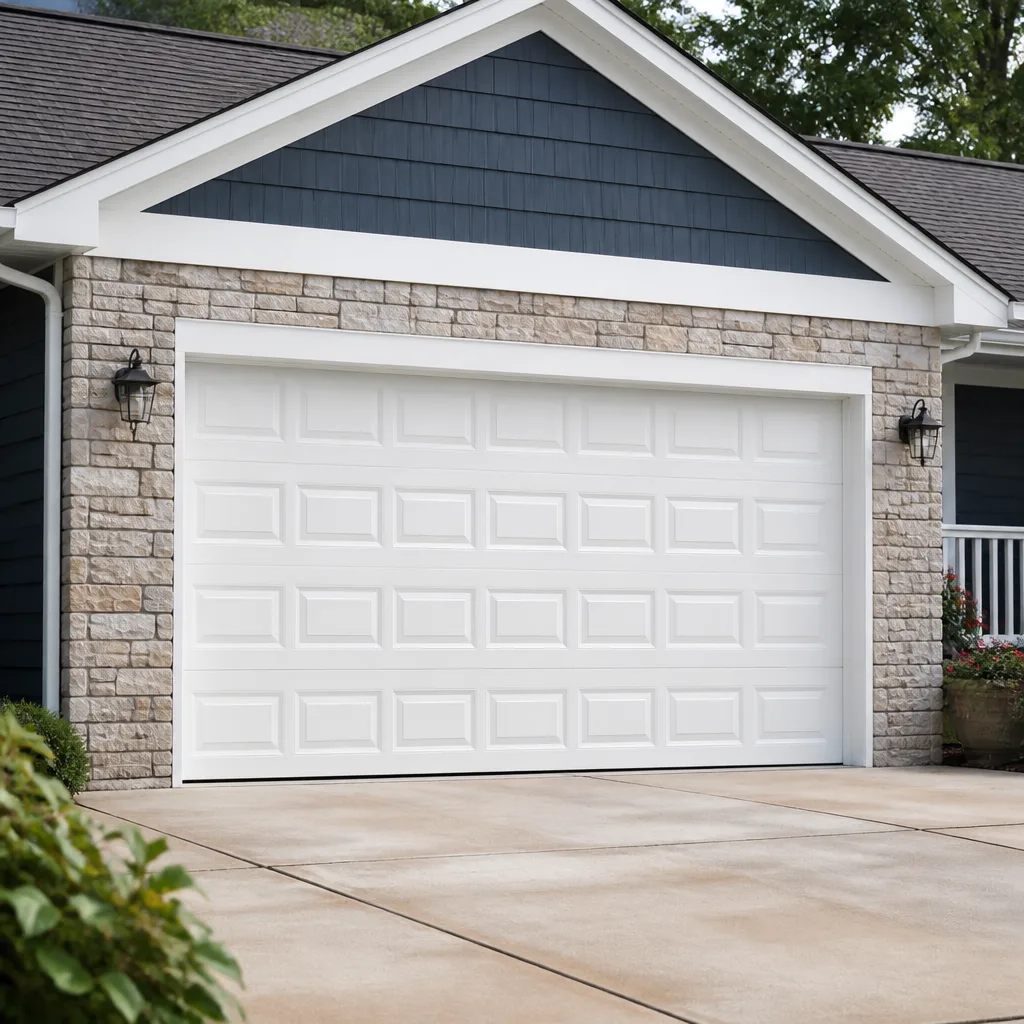
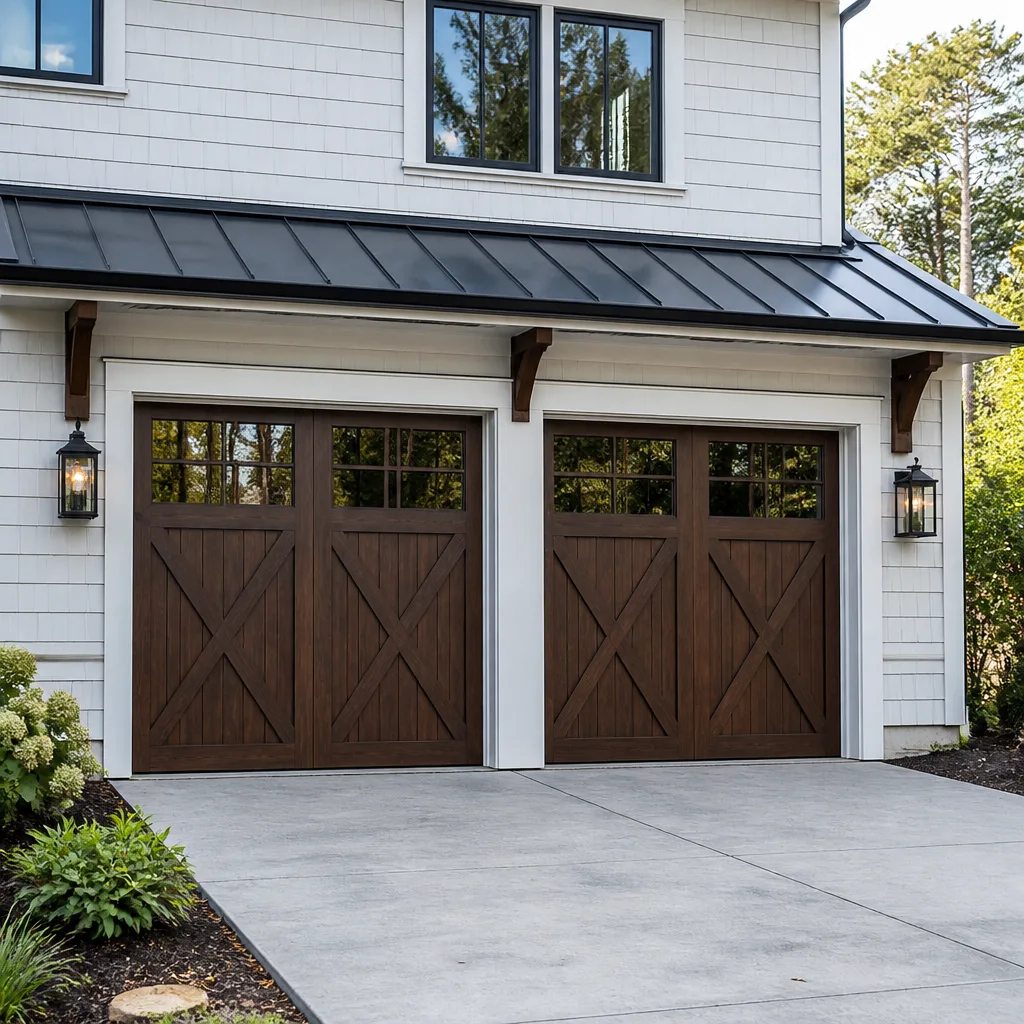
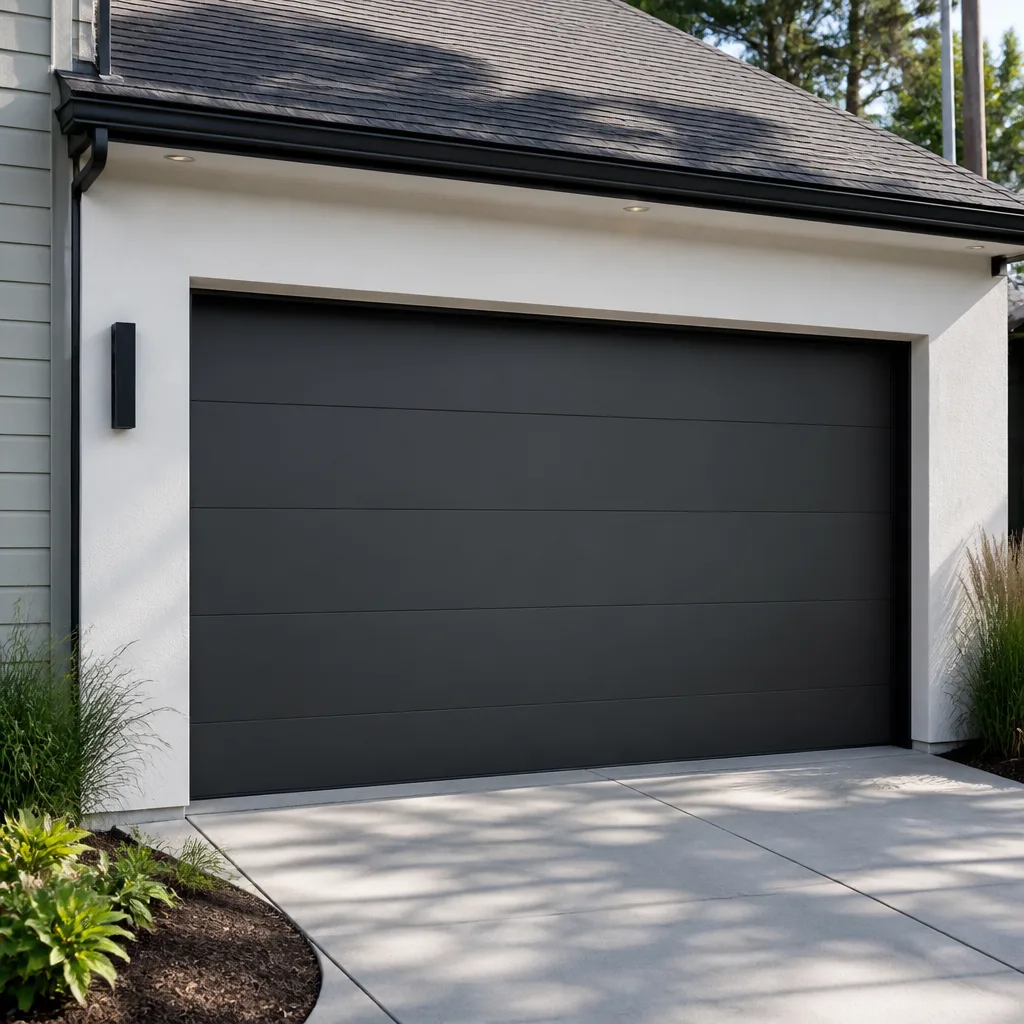
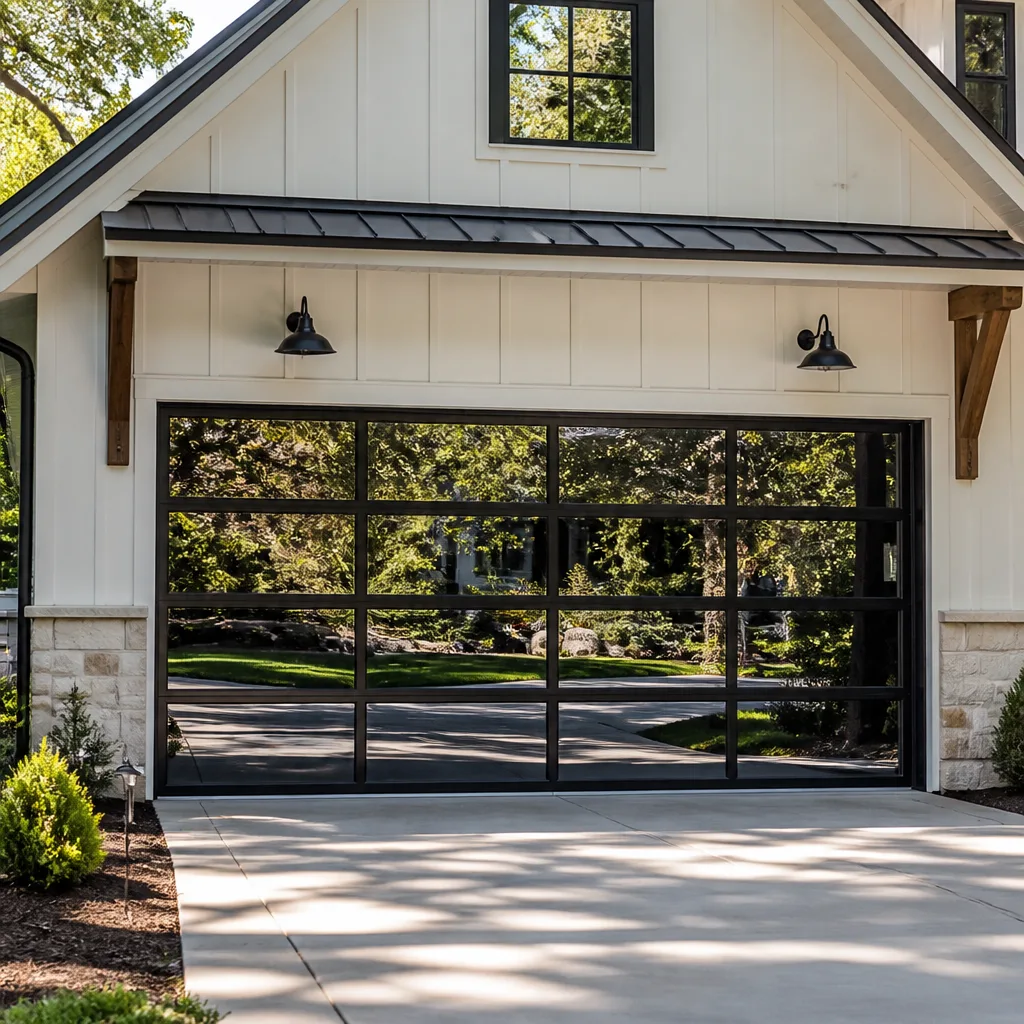
 Before
 After
After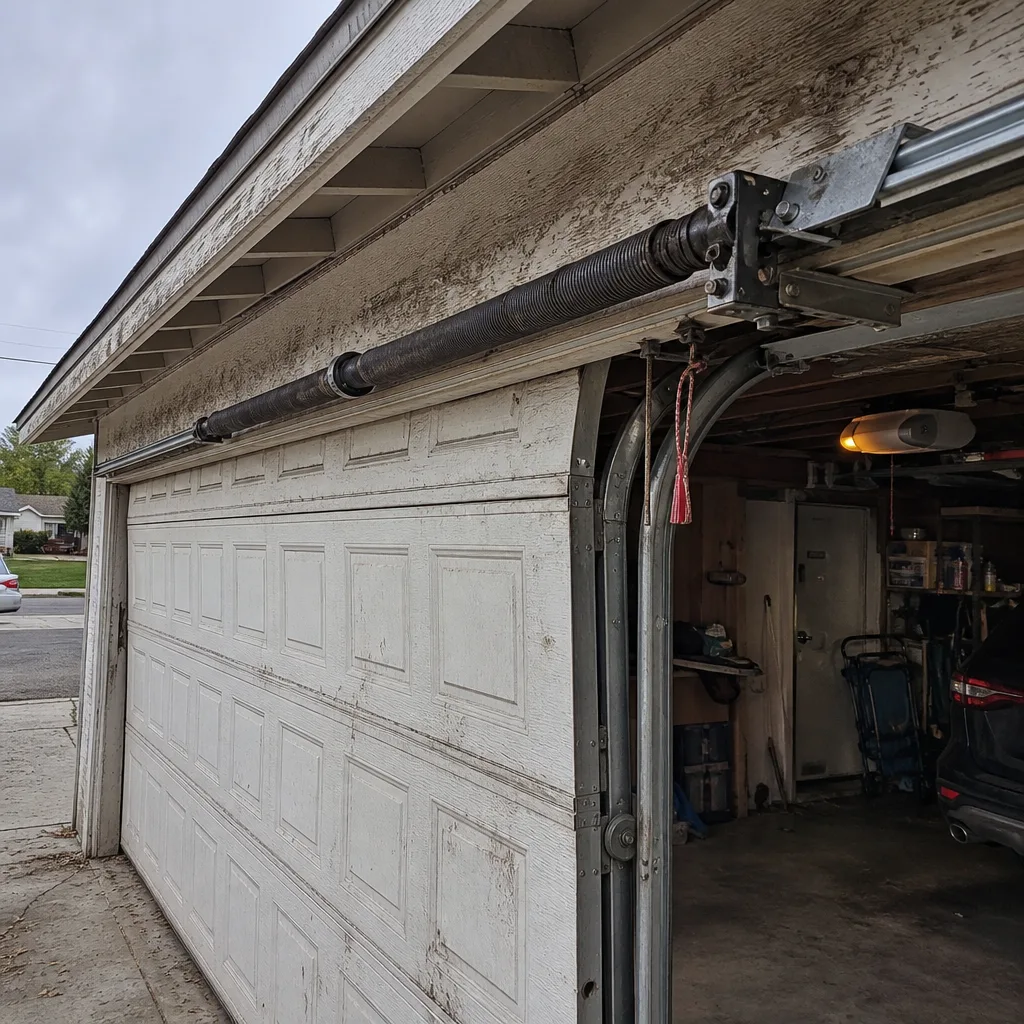 Before
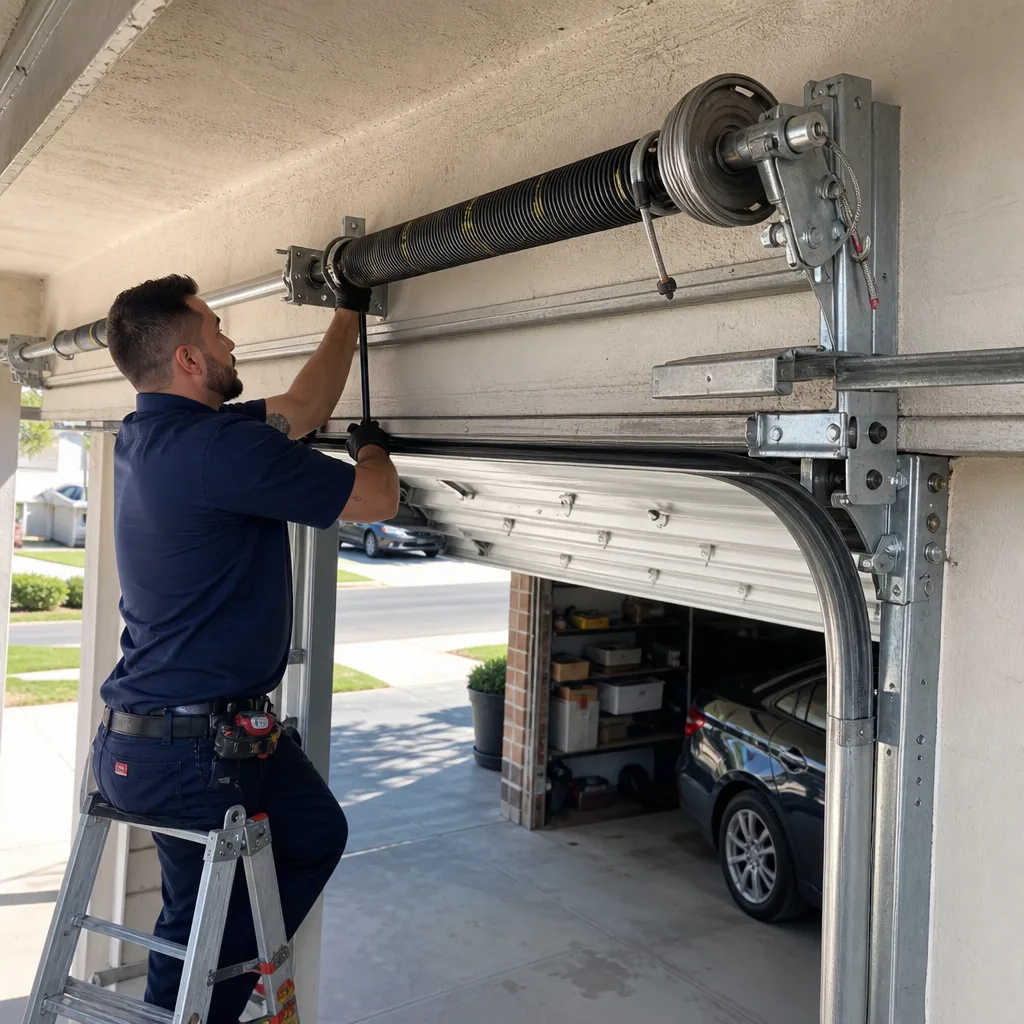 After
After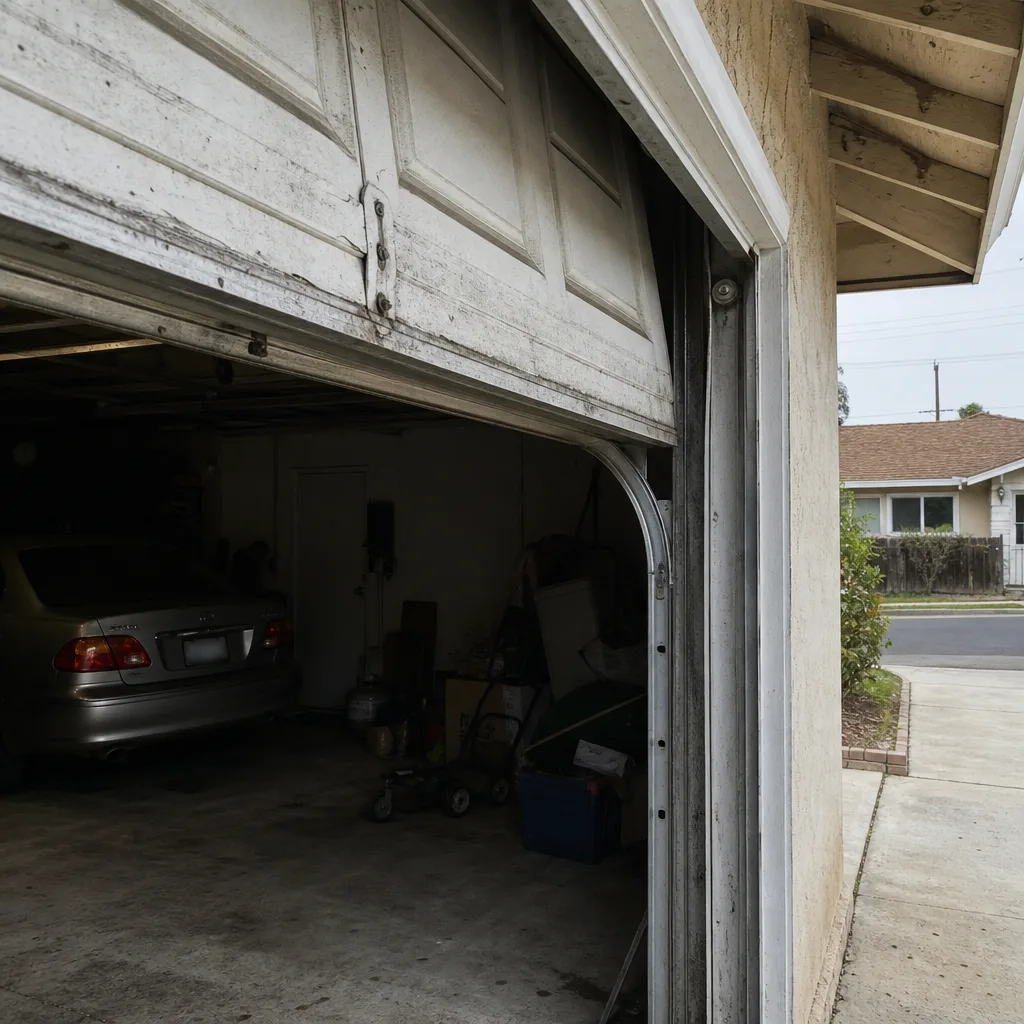 Before
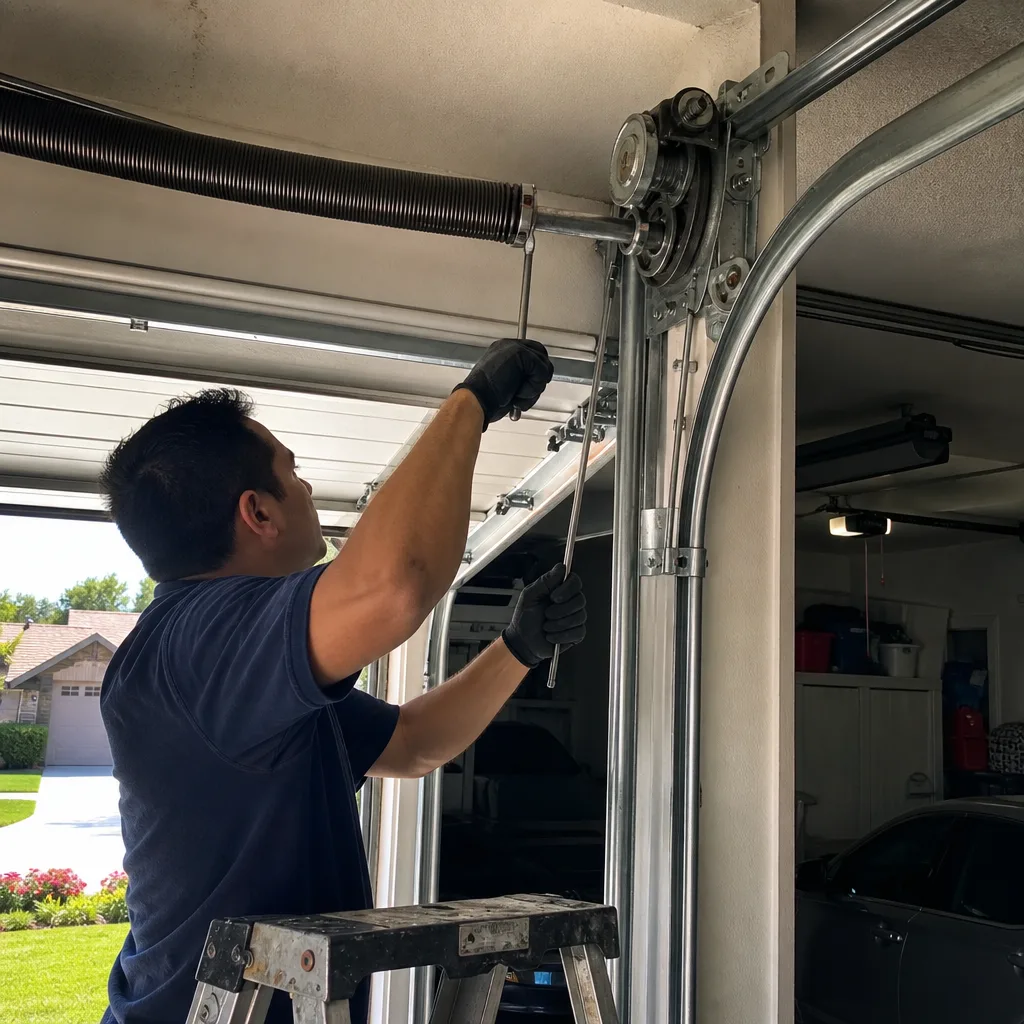 After
AfterGarage Door Repair Maintenance Checklist for Anaheim Homeowners
The single most common preventable garage door failure we see in Southern California is a corroded bottom seal that was last inspected during a Bush administration. In Anaheim, the marine layer rolls in overnight, deposits salt moisture on steel hardware, and bakes it off by noon under UV that would fade a dashboard in two summers. That cycle, repeated three hundred days a year, eats rollers, swells seals, and turns track bolts into rust nubs. This guide is built around Anaheim’s actual environment, not a generic seasonal template copied from Ohio. Follow it, and you’ll catch problems before they strand you in the driveway.
Quick Answer
A proper garage door maintenance checklist for Anaheim homeowners includes monthly visual inspections of springs, cables, and rollers; quarterly lubrication with high-temperature synthetic grease; semi-annual balance and reverse-safety tests; and replacement of weather seals every 2-3 years due to UV and marine-layer corrosion. Santa Ana wind events warrant immediate post-storm track alignment checks. Most Anaheim homeowners who follow this schedule avoid Garage Door Repair services entirely.
Table of Contents
- Why Anaheim’s Climate Damages Garage Doors Faster Than Inland Cities
- Month-by-Month Maintenance Calendar for Anaheim’s Actual Seasons
- Hardware That Corrodes Fastest in Marine-Influenced Air
- Santa Ana Wind Damage Checks: What to Look for the Morning After
- Lubrication That Survives Anaheim Heat and UV
- How to Document Maintenance So Your Contractor Sees the Full Picture
- What You Can Safely Check Yourself vs. What Requires a Trained Technician
- Common Mistakes to Avoid
- When to Call a Professional
- Frequently Asked Questions
- The Bottom Line
Why Anaheim’s Climate Damages Garage Doors Faster Than Inland Cities
Anaheim sits 15 miles from the Pacific, close enough for the marine layer to push through the Santa Ana River gap on summer nights, far enough inland to hit 95 degrees by afternoon. That combination is brutal on garage doors in ways that homeowners in Riverside or Palm Springs rarely face.
The marine layer deposits chloride-rich moisture on exposed steel. By 10 AM, the sun burns it off, but the salt residue remains. Repeat that cycle daily, and standard zinc-plated hardware develops red rust in 18 months instead of five years. In the Anaheim Hills, where elevation catches more wind, we’ve seen track brackets corrode through completely.
UV is the second killer. Anaheim averages 280 sunny days yearly. That radiation hardens rubber seals, cracks vinyl weatherstripping, and degrades standard lithium greases into a gummy residue that attracts dust and grit. A door in Fullerton, five miles north, might see 20% less UV exposure due to slightly more cloud cover. The difference matters over time.
The third factor is temperature swing. A garage door in Anaheim can go from 58 degrees at 6 AM to 88 degrees by 2 PM. Steel tracks expand and contract. Rollers that were snug at dawn can bind by midday, or rattle loose by evening. Inland deserts stay hot consistently; coastal cities stay moderate. Anaheim gets the worst of both patterns.
Here’s what this means practically: a maintenance checklist written for Kansas or even San Diego will miss the failure modes we actually see. The sections below address Anaheim specifically.
Month-by-Month Maintenance Calendar for Anaheim’s Actual Seasons
Anaheim does not have a Midwest spring and fall. We have a wet winter (January through March), a mild April-May, a dry summer (June through October), and Santa Ana wind season (October through January). Your maintenance should follow this rhythm, not a four-season template.
January through March: The Wet Months
This is when the marine layer is thickest and most persistent. Moisture lingers past noon. Salt deposits accumulate.
- Inspect the bottom seal for swelling, cracking, or gaps where light shows through. A compromised seal lets water pool on the concrete, which accelerates rust on the bottom fixtures.
- Check all exterior hardware with a flashlight: roller stems, track bolts, hinge pins, spring anchor brackets. Look for orange bloom, not just heavy rust. Early corrosion is powdery and light-colored.
- Run the door and listen for new squeaks or grinding. Winter moisture washes away lubricant faster than summer heat.
- Test the photo-eye reverse. Wet concrete reflects beam scatter; misaligned eyes are more likely to fail in high humidity.
April through May: The Transition
Temperatures moderate. This is your window for deeper maintenance before summer heat arrives.
- Apply fresh synthetic lubricant to all moving parts (see the lubrication section below for product specifics).
- Tighten all track bolts and lag screws. The winter expansion-contraction cycle loosens them.
- Inspect weather seals on the sides and top. UV damage from last summer shows up now as surface cracking.
- Test door balance with the opener disconnected. A door that drifts down from half-open has a spring issue developing.
June through September: The Dry Bake
Minimal rain, maximum UV, occasional monsoonal humidity spikes.
- Check lubricant condition monthly. High heat thins grease and causes it to migrate off roller stems onto the door panels.
- Inspect nylon rollers for flat spots or bearing seizure. Nylon softens in heat; a roller that was round in May may be oval by August.
- Clean photo-eye lenses. Dust from Santa Ana wind precursors accumulates now.
- Verify the emergency release rope hangs freely. Heat can cause plastic handles to deform and bind against the opener rail.
October through December: Santa Ana Season
High winds, low humidity, fire risk. This is when doors go out of alignment or fail structurally.
- Inspect track mounting brackets after every significant wind event. Look for fresh wall gaps, bent vertical track, or rollers that have jumped the rail.
- Check the door’s wind load resistance. Older wood doors in the Anaheim Colony Historic District are especially vulnerable; modern steel doors with horizontal reinforcements handle gusts better.
- Re-lubricate before the first major Santa Ana event. Dry, dusty lubricant increases friction and motor strain.
- Test the auto-reverse with a 2×4 board. A door fighting wind resistance needs sensitive safety settings.
Hardware That Corrodes Fastest in Marine-Influenced Air
Not all steel is equal, and not all corrosion is visible. In Anaheim, these components fail first:
- Bottom fixtures and cable drums: These sit closest to the floor where moisture pools. The chloride in marine air accelerates galvanic corrosion where aluminum drums contact steel shafts. We replace more cable drums in Anaheim than in our Orange service area, 12 miles inland.
- Track bolts and jamb brackets: Standard zinc-plated hardware develops white corrosion products within two years. In the flat neighborhoods near Disneyland, where garages are older and ventilation poorer, we’ve seen bolts snap during routine operation.
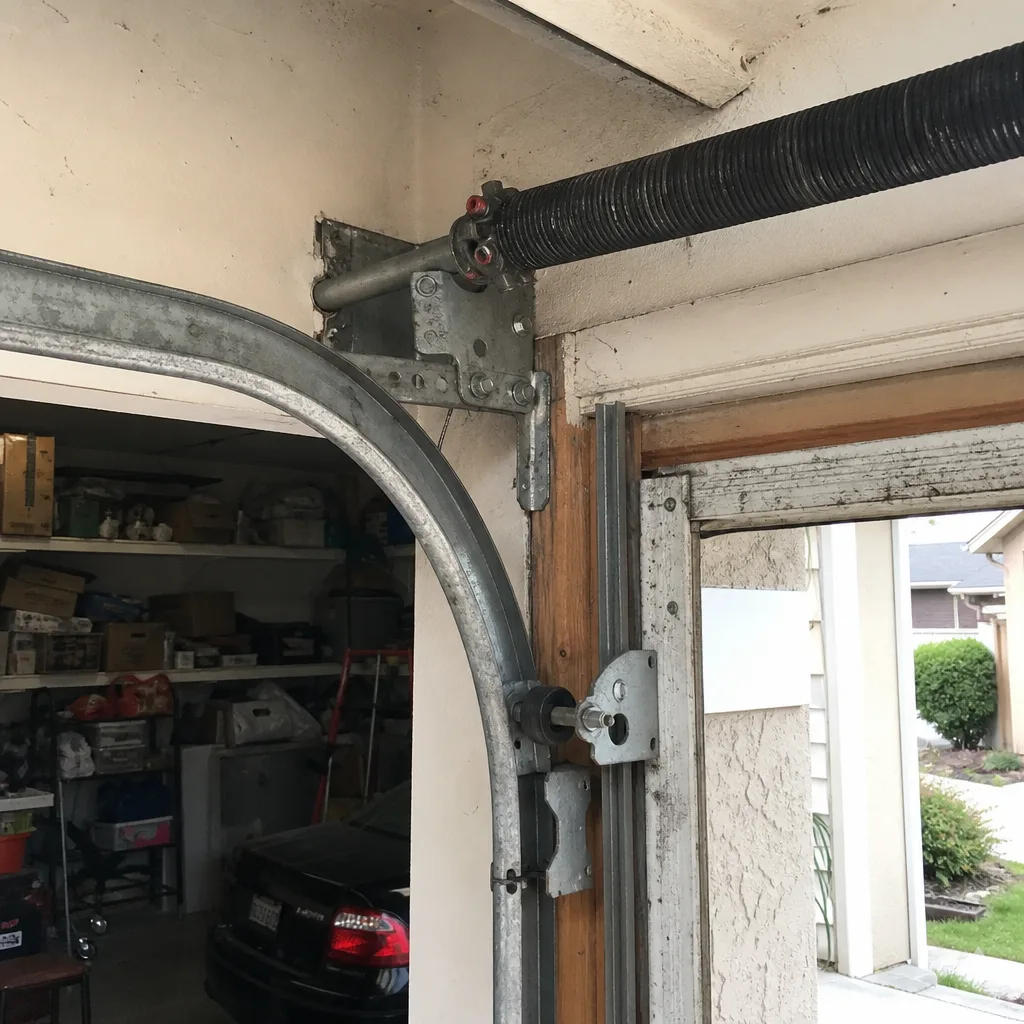
- Torsion spring anchor brackets: The bracket that holds the spring tube to the header collects condensation because it’s the highest point in the garage and the coldest surface overnight. Rust here is dangerous; a failed anchor bracket releases spring tension unpredictably.
- Chain-drive opener chains: Exposed steel chain collects airborne salt, especially in garages with west-facing doors that catch afternoon onshore flow. Rusty chains jump sprockets and strip gears in LiftMaster and Chamberlain units we service regularly.
- Hinge pins: The #1 through #3 hinges carry the most load. Their pins seize, then the hinge ears crack when the opener forces the door. In Anaheim’s humidity, pins need lubrication twice yearly, not annually.
For homeowners near the Anaheim Resort or Platinum Triangle, where new construction has tighter garage envelopes and less air exchange, corrosion runs faster. Trapped humid air has nowhere to go. If your garage smells musty, your hardware is corroding faster than a ventilated equivalent.
Santa Ana Wind Damage Checks: What to Look for the Morning After
Santa Ana winds peak in October through January, with gusts to 50 mph in Anaheim and higher in the hills. A garage door is the largest moving wall on most houses. When wind loads hit it broadside, damage is specific and often hidden.
Here’s what to check the morning after a wind event, before you operate the door:
- Visual track inspection from inside: Stand at the back of the garage and sight down each vertical track. They should be plumb and parallel. Wind pressure bows the door outward; the rollers press the track, and the track pulls away from the jamb. Look for fresh gaps between track and wood framing, or bent track flanges.
- Roller position check: With the door closed, examine each roller where it sits in the track. A roller that has jumped the rail will sit crooked or above the track edge. Do not operate the door if any roller is disengaged. The door can drop or jam catastrophically.
- Panel seam alignment: Wind flexes door sections. Check that horizontal panel seams line up across the width. A shifted section indicates a broken internal strut or hinge failure.
- Opener rail deflection: Look up at the opener rail. It should be straight. Wind load transmitted through the door can bow the rail or loosen its ceiling mounting.
- Spring tension test: Disconnect the opener and lift the door manually to waist height. It should stay put. If it drifts down rapidly, wind stress has accelerated spring fatigue. Do not reconnect the opener; the motor will overwork and burn out.
In the Anaheim Hills and Orange Park Acres areas, where canyon winds accelerate, we’ve seen entire door systems require realignment after a single night. The morning-after check takes five minutes and prevents a $400 emergency call.
Safety note: If you find track damage, roller displacement, or spring imbalance, do not attempt repair yourself. Garage door springs are under extreme tension and can cause serious injury or death. This is trained technician work.
Lubrication That Survives Anaheim Heat and UV
The wrong lubricant is worse than none. Standard white lithium grease, the default at most hardware stores, breaks down in Anaheim’s combination of heat and UV. Within six weeks it becomes a dirt magnet. Within three months it’s a grinding paste.
We’ve tested products across 42 years in this climate. Here’s what holds up:
- For roller stems and hinges: A synthetic, high-temperature garage door lubricant with a base temperature rating above 350°F. Look for PTFE or silicone-synthetic blends in aerosol form with a straw nozzle for precise application. Apply sparingly; excess lubricant drips onto the door and collects dust.
- For torsion springs: A dedicated spring lubricant, not general-purpose grease. Springs generate friction heat during operation. The right product penetrates between coils and resists sling-off at high RPM.
- For chain drives: Manufacturer-specified chain lubricant, not WD-40. WD-40 is a water displacer, not a lubricant. It evaporates and leaves metal bare. For Genie screw-drive openers, use the brand’s recommended lubricant; the threads are precisely machined and incompatible greases cause binding.
- For screw drives: Lithium-based grease specifically formulated for screw-drive openers. Apply a thin bead along the rail, then run the door twice to distribute. Wipe excess; it will otherwise migrate to the trolley and attract grit.
What to avoid: any product with a mineral oil base, any “multi-purpose” spray that does not list temperature ratings, and any lubricant that comes out of the can as a thick foam. Foam products look impressive but do not penetrate bearing surfaces.
Application frequency in Anaheim: every 90 days for exposed hardware, every 60 days if your garage faces west and gets afternoon sun directly on the door. The $12 can of proper lubricant prevents the $280 roller replacement.
How to Document Maintenance So Your Contractor Sees the Full Picture
Most homeowners do some maintenance. Almost none document it. When a technician arrives for a repair, they see the current condition, not the progression. Documentation changes that.
Here’s the method we recommend to Anaheim homeowners who want to stay ahead of problems:
- Take baseline photos: Once yearly, photograph the spring assembly, the full track length on both sides, the bottom seal from inside and outside, and the opener rail. Use your phone’s date stamp. Store in a dedicated album.
- Log lubrication dates: A simple note: “March 15, synthetic grease on rollers and hinges.” This prevents over-lubrication, which is as harmful as under-lubrication. Excess grease traps abrasive dust.
- Record operational changes: “June 3: door started rattling at 2 feet from closed.” “October 12: opener strained for 3 seconds before door moved after wind night.” These time-stamped observations let a technician correlate symptoms with weather events.
- Keep part numbers: If you replace a remote, a weather seal, or a roller yourself, photograph the packaging. When you call for service, we can verify compatibility before dispatch. This is especially useful for Clopay and Amarr doors, which use proprietary seal profiles.
- Share the album at service calls: Show the technician your photo history. In 30 seconds, they see what changed. A corroded bracket that was clean 18 months ago indicates accelerated conditions, not normal wear. That changes the repair approach from reactive to preventive.
We’ve had Anaheim customers in the Colony district avoid full spring replacements because their photo log showed gradual sagging we could correct with tension adjustment. Without the history, we would have recommended replacement as the safe option. Documentation saves money and extends equipment life.
What You Can Safely Check Yourself vs. What Requires a Trained Technician
There’s honest work a homeowner can do, and there’s work that risks serious injury. The line is clear.
Safe for Homeowners
- Visual inspection of all hardware from a standing position
- Photo-eye alignment and cleaning
- Weather seal condition check
- Manual operation and balance test with the opener disconnected
- Lubrication of roller stems, hinges, and opener rail (not the spring)
- Tightening of accessible track bolts with a socket wrench
- Remote battery replacement and code programming
Requires a Professional
- Any work on torsion or extension springs, including tension adjustment
- Cable replacement or drum repair
- Track realignment after impact or wind damage
- Opener motor gear replacement or circuit board work
- Bottom fixture replacement (these are under cable tension)
- Panel replacement or structural repair
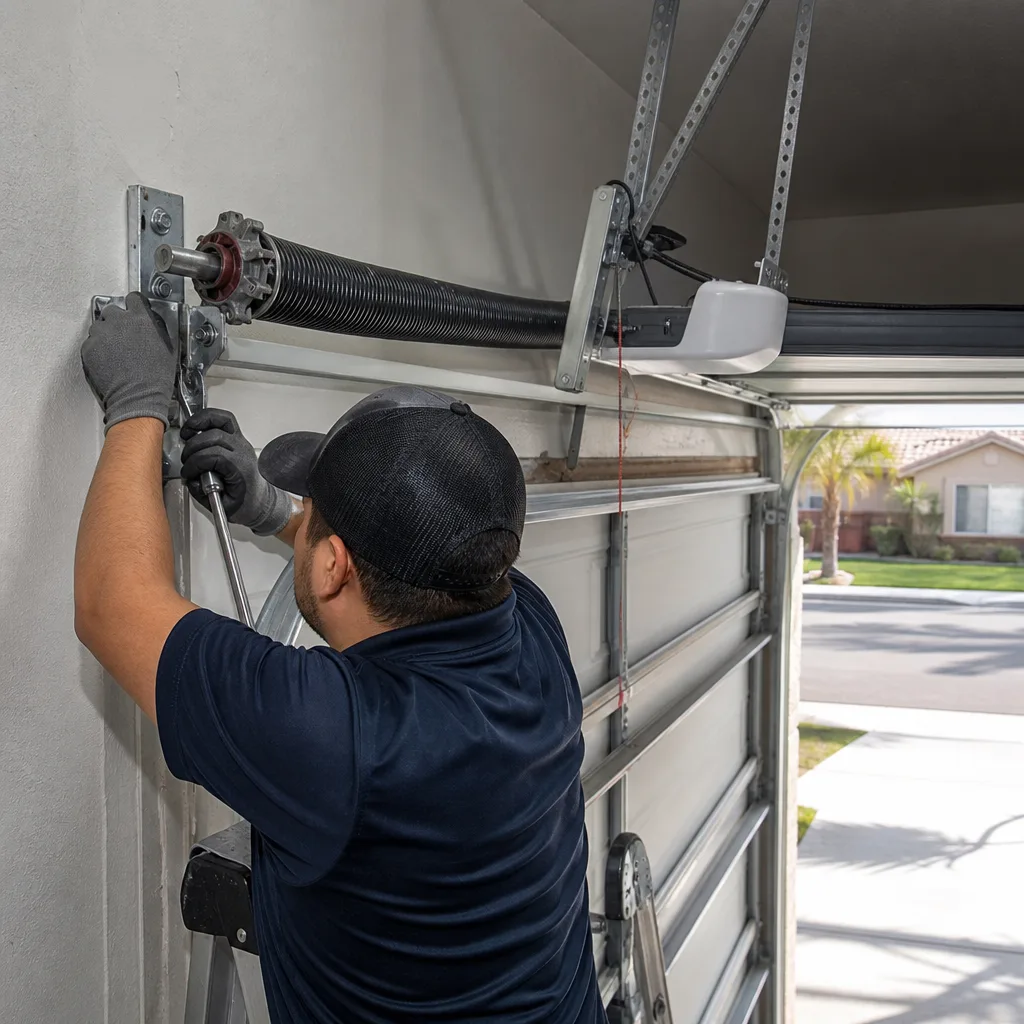
Critical safety note on springs: A standard torsion spring for a 16-foot wide door stores enough energy to lift 150 pounds and can cause fatal injury if mishandled. The winding cones are not designed for adjustable wrenches. The set screws require specific torque. Every year, emergency rooms treat homeowners who attempted spring work. The cost of professional service is trivial against that risk.
At Mainspring Garage Door Co., our technicians carry spring inventory for all common door sizes. Most Mainspring Garage Door Co. home service calls in Anaheim finish in one visit because the parts are already on the truck.
Common Mistakes to Avoid
- Using WD-40 as a lubricant: In Anaheim’s heat, it evaporates in weeks, leaving metal unprotected. It’s a solvent, not a grease. We’ve seen homeowners spray it monthly for years, wondering why their rollers seized.
- Ignoring the door after a Santa Ana wind: The morning-after check takes five minutes. Skipping it lets track misalignment worsen until the opener burns out or a roller jumps the rail during operation.
- Buying the cheapest replacement rollers: Nylon rollers with no ball bearings, common at big-box stores, last 18 months in Anaheim’s climate. Sealed steel ball-bearing rollers with a 10-ball design last 8-12 years. The price difference is $4 per roller. The labor to replace them is identical.
- Over-tightening track bolts: Track needs slight play to accommodate door flex. Cranking bolts until the track bends inward causes binding and premature roller wear. Finger-tight plus a quarter turn is correct.
- Neglecting the emergency release: Anaheim’s heat degrades the plastic handle and the rope. A melted or frayed release fails when you need it during a power outage or opener failure. Check it quarterly.
- Assuming a quiet door is a healthy door: Some failures are silent. A cracked spring can hold tension for months while degrading. A bent track can guide rollers smoothly until sudden collapse. Visual inspection catches what sound does not.
- Using a generic maintenance schedule: The “spring and fall” checklist from a national website ignores Anaheim’s marine layer, UV intensity, and Santa Ana pattern. Follow the month-by-month calendar in this guide instead.
When to Call a Professional
Call a technician immediately if the door hangs crooked, if a cable is frayed or off the drum, if the opener strains or reverses unexpectedly, if a spring shows a gap or rust bloom, or if any roller has left the track. These conditions worsen with each operation and can cause injury or property damage.
For routine concerns, a professional inspection every 18-24 months catches developing issues before they become emergencies; read How to Hire a Garage Door Contractor in Anaheim: A Step-by-Step Guide to choose wisely. In Anaheim’s climate, that interval is appropriate for most residential doors; coastal properties may benefit from annual inspection.
Mainspring Garage Door Co. offers free estimates in Anaheim. A technician will assess your door’s condition, review your maintenance history if you’ve documented it, and quote a flat price before any work begins. No surprises on the bill. Call (714) 782-0297.
Frequently Asked Questions
Monthly visual checks, quarterly lubrication, and semi-annual balance and safety tests are the minimum for Anaheim’s climate. The marine layer and UV accelerate wear beyond what inland homeowners experience. Our $89 Seasonal Tune-Up covers the full inspection and adjustment if you prefer professional handling. Call (714) 782-0297 to schedule.
A professional tune-up runs $89-$150 depending on door size and condition. Repair costs vary: roller replacement is typically $120-$280, spring replacement $200-$400, and opener service $150-$350. Mainspring states the flat price before work begins, and we offer $50 off any repair over $250. Call (714) 782-0297 for an exact quote on your door.
Homeowners can safely lubricate roller stems, hinges, and the opener rail with the correct product. Never lubricate the spring yourself, and never attempt to adjust spring tension. If you’re uncertain which product to use or where to apply it, a professional tune-up includes proper lubrication and costs less than replacing damaged components. Call us for guidance.
Santa Ana winds create lateral pressure that bows the door outward, stressing track mounting brackets and stretching spring tension unevenly. The morning after a wind event, check for bent track, displaced rollers, and door sections that no longer align horizontally. Operating a wind-damaged door can cause a roller to jump the rail or a spring to snap.
Proximity to the marine layer, garage ventilation, door orientation, and hardware quality all matter. West-facing doors in poorly ventilated garages near the Anaheim Resort see the fastest corrosion. If your door faces the afternoon sun and your garage lacks vents, humidity bakes in rather than escaping. Upgrading to galvanized or stainless hardware and improving ventilation slows the process significantly.
At Mainspring, the price we quote is the price you pay. We diagnose, then state the flat price before any work begins. If we find additional issues during repair, we stop and explain them with a separate quote. You approve every dollar. No surprises on the bill. Call (714) 782-0297 for a free estimate.
The Bottom Line
Anaheim’s garage doors fail in predictable ways: marine-layer corrosion, UV degradation, and Santa Ana wind stress. A generic maintenance schedule misses all three. The homeowners who avoid emergency repairs are those who inspect monthly with Anaheim’s specific climate in mind, who lubricate with products rated for high heat, who check their doors after wind events, and who document changes so technicians see progression, not just endpoints.
The work is not complicated. It requires attention and the right information, which this guide provides. For everything else, a trained technician with the right parts on the truck finishes most jobs in a single visit.
Call (714) 782-0297 for a free estimate, or ask about our $89 Seasonal Tune-Up. Senior and veteran homeowners receive a permanent 5% discount. We answer live, 24/7.
Written by Carl Dutton, Owner at Mainspring Garage Door Co., serving Anaheim since 2016.