
Last updated September 10, 2026
Full 25-point door and opener safety check with every visit - springs, cables, rollers, tracks, and your LiftMaster or Chamberlain opener included
You get a price before we start. It does not change when the truck arrives.
 Before
 After
After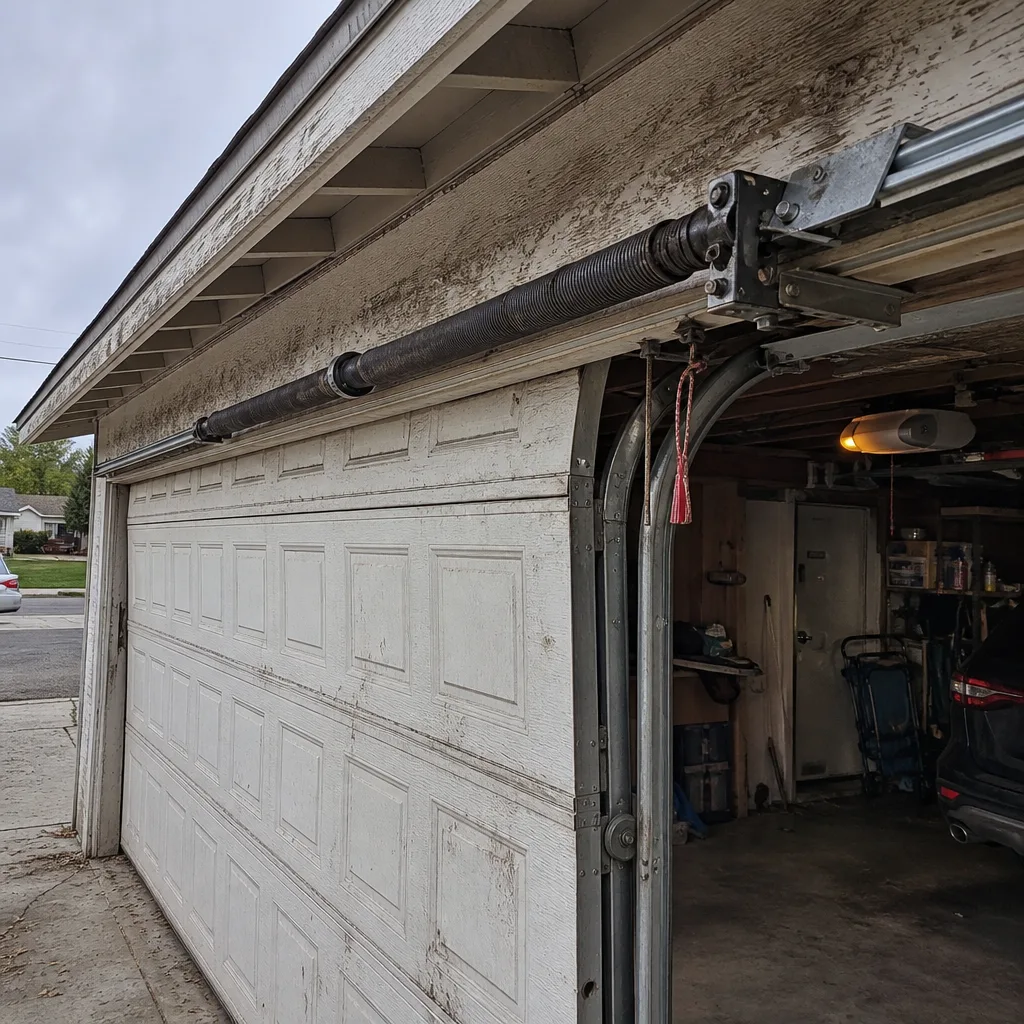 Before
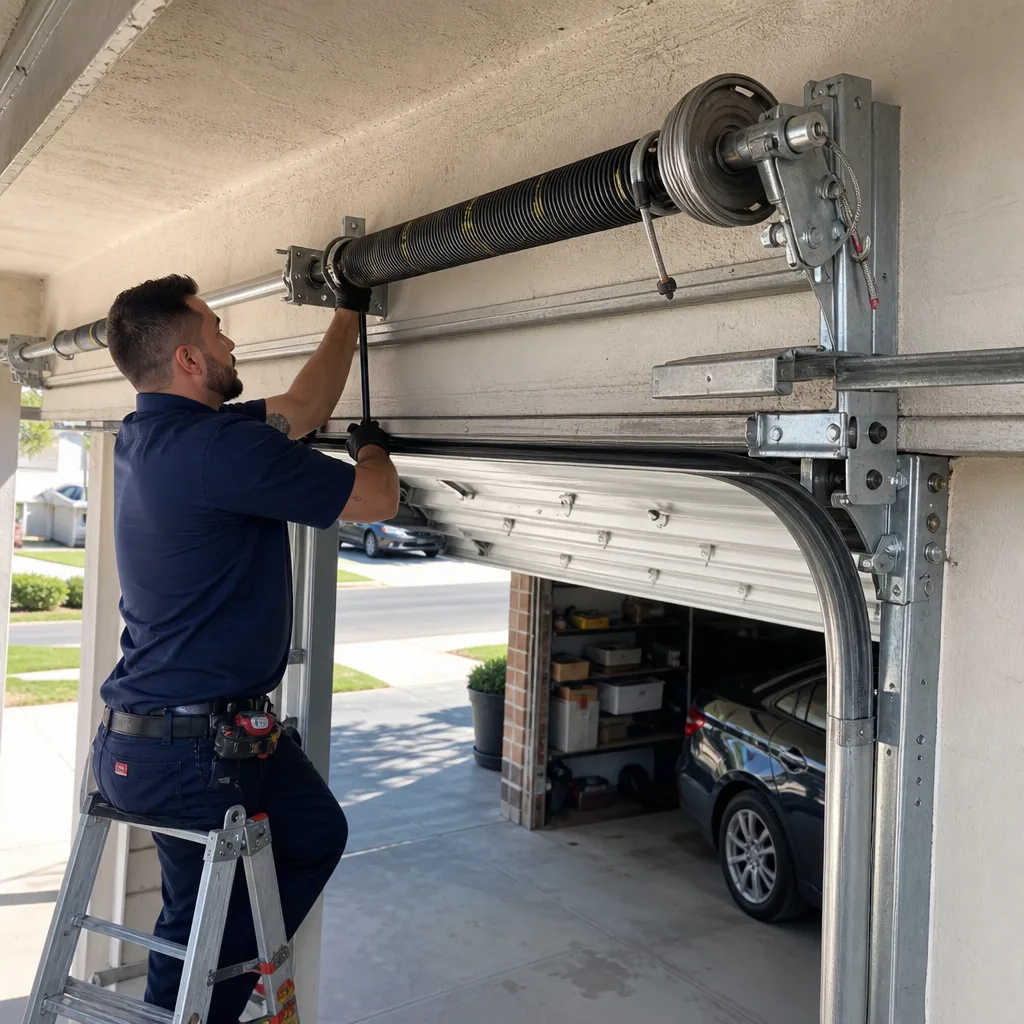 After
After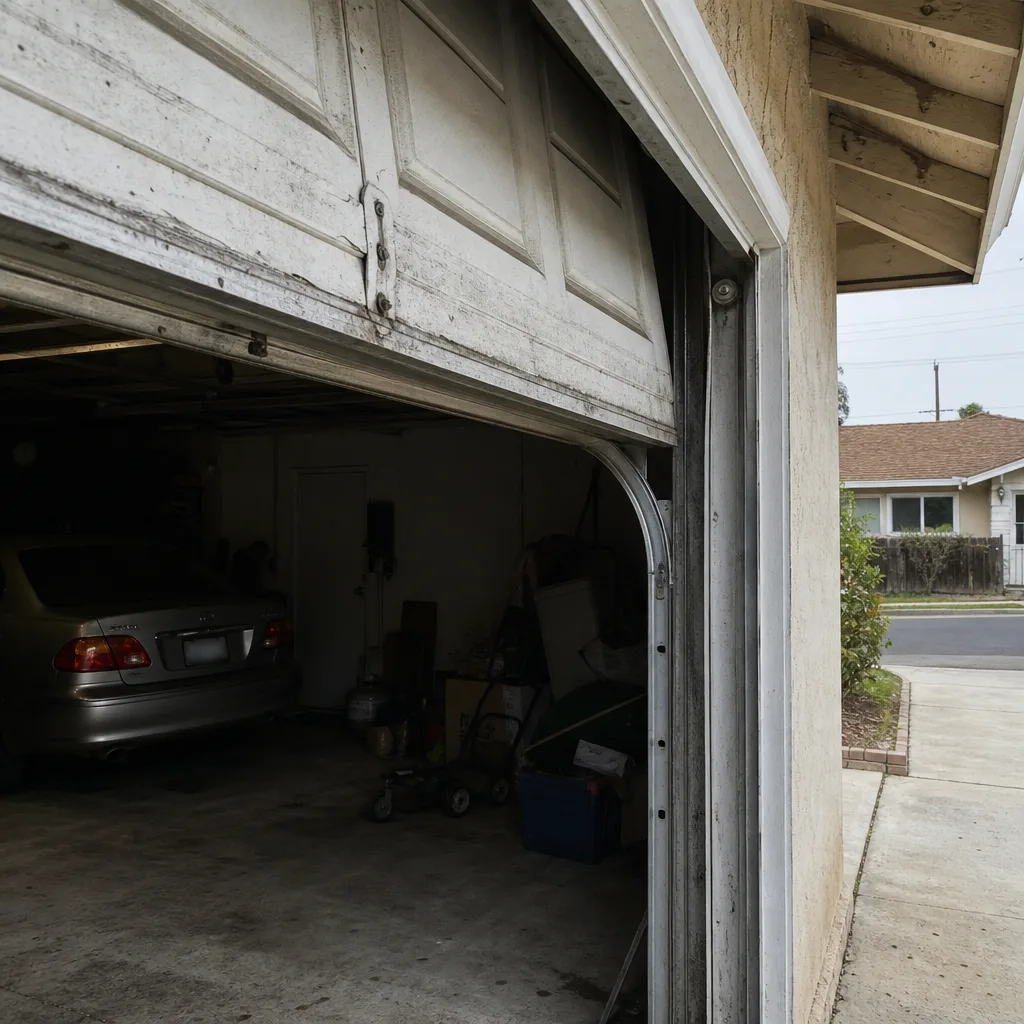 Before
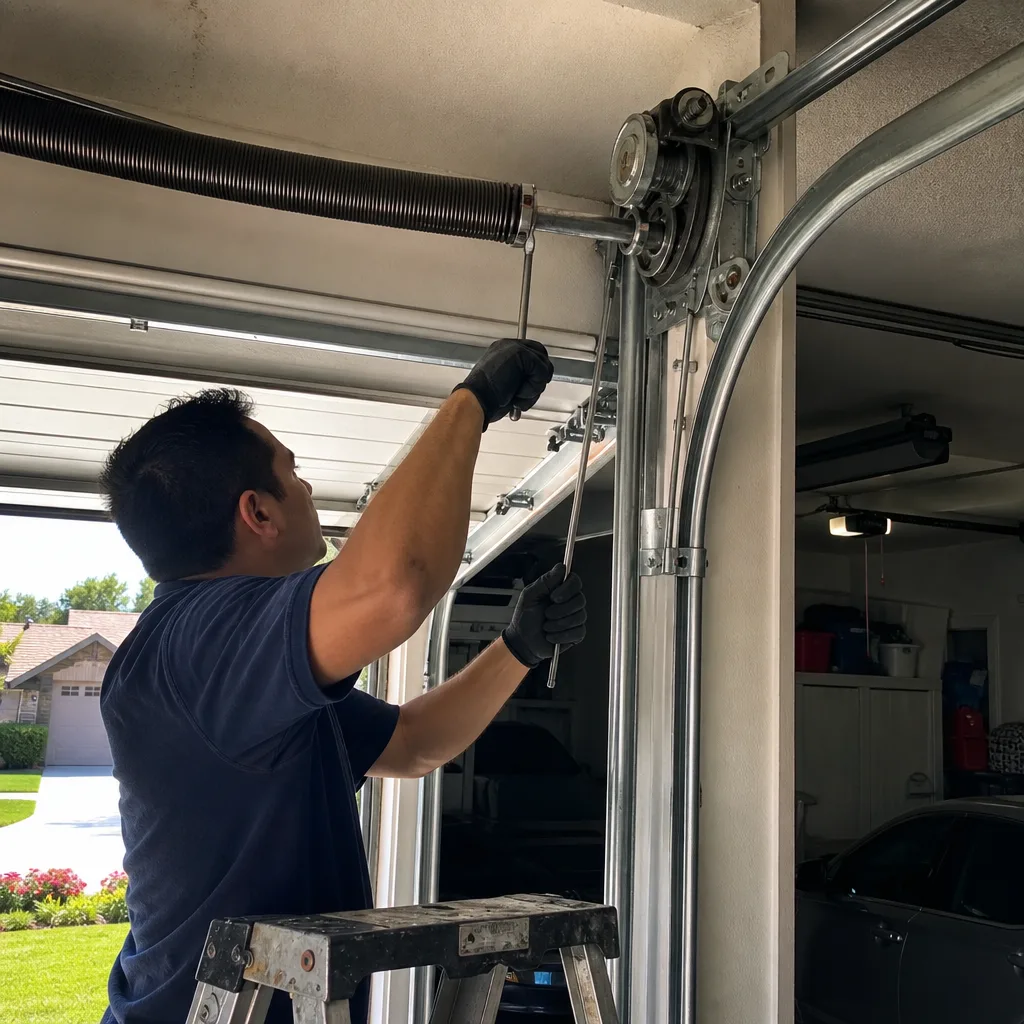 After
AfterGarage Door Warning Signs: A Anaheim Homeowner’s Reference Guide
Most garage door failures in Anaheim do not happen suddenly. They announce themselves for weeks through sounds, movements, and visual changes that homeowners learn to ignore. A grinding sound on the way up and a smooth descent is not a door that’s “mostly fine” - it’s a worn torsion drum that has maybe 60 more cycles before it stops the door cold. After 42 years in this trade, we’ve learned that the homeowners who call early spend a fraction of what the ones who wait spend. This guide - alongside our Complete Guide to Garage Door in Anaheim - teaches you to read your garage door the way our technicians do on first inspection, with specific attention to how Anaheim’s climate and housing stock shape the warning signs you’ll see.
Quick Answer
The most important garage door warning signs are: new or changing sounds (grinding, popping, scraping), visible gaps or fraying in springs and cables, uneven or slow movement, and reversal without obstruction. In Anaheim’s heat, morning smoothness that turns to afternoon strain often signals a failing spring or misadjusted opener force setting. These signs typically appear 2-6 weeks before complete failure, giving homeowners a window to schedule service before the door traps a vehicle or becomes a security risk.
Table of Contents
- Sound-by-Sound Diagnostic: What Your Garage Door Is Telling You
- Visual Cues You Can Spot From Ground Level
- Behavioral Warning Signs and Their Mechanical Causes
- How Anaheim’s Heat Changes the Warning Signs
- What to Monitor and What Demands Same-Week Service
- Brand-Specific Patterns: LiftMaster, Genie, and Raynor
- Common Mistakes to Avoid
- When to Call a Professional
- Frequently Asked Questions
Sound-by-Sound Diagnostic: What Your Garage Door Is Telling You
Every sound a garage door makes has a mechanical source. Learning to match the sound to the component saves you from the surprise of a Sunday morning door that won’t budge.
Grinding on Ascent, Smooth on Descent
This is the torsion drum wearing out. The drum sits at the end of the spring shaft and winds the cable as the door rises. When the grooves wear down, the cable slips and catches, creating that grinding chatter. The descent is smooth because gravity does the work; the drum barely turns. In Anaheim’s older neighborhoods like the Colony and Anaheim Hills, we see this frequently on 20-year-old Raynor and Clopay doors that still have original hardware. The drum has roughly 50-100 cycles left when the grinding becomes audible. A cycle is one open and one close. If you use your door four times daily, that’s two weeks.
Popping or Snapping Sounds
A single loud pop usually means a spring has broken. Torsion springs store enormous energy - enough to lift a 200-pound door with one hand. When they fail, the release is violent. If you hear the pop and the door now feels twice as heavy, or the opener strains and stops, the spring is gone. Do not attempt to operate the door. The remaining spring is carrying unbalanced load, which damages the opener and creates a hazard.
Multiple smaller pops during operation point to a failing roller. Steel rollers seize; nylon rollers crack. Each pop is the roller binding in the track, then releasing. This progresses to the roller jumping the track, which bends the vertical track and requires replacement of both.
Scraping or Rubbing
Scraping along one side indicates the door is out of plumb. The horizontal tracks have shifted, or the vertical tracks have settled unevenly. In Anaheim, this often follows foundation settling after winter rains or earthquake swarms. The door rubs the weatherstrip on one side, wearing a visible groove. Left uncorrected, the door can jump the track entirely.
Rattling That Worsens Over Time
Rattling is loose hardware. Holes in the door panels wallow out. Bolts backing out of the track hangers. The opener rail loosens from the header. This sounds minor but creates a cascade: loose hardware allows vibration, vibration accelerates wear, and worn components fail faster. In our experience, a rattling door that gets tightened and inspected costs $89 for a tune-up. One that fails costs $400-800.
Squealing During Operation
Squealing is lubrication failure, usually in the rollers or bearings. It seems cosmetic. It is not. Dry rollers generate heat; heat hardens the nylon or degrades the steel bearings. The roller then seizes, and the door jams. In Anaheim’s dry climate, lubrication evaporates faster than in coastal cities. A door that was quiet in March may squeal by August.
Key sounds and their sources:
- Grinding on ascent only: Worn torsion drum
- Single loud pop: Broken torsion or extension spring
- Repeated small pops: Failing roller (seized steel or cracked nylon)
- Scraping one side: Track misalignment or settling
- Rattling that grows: Loose hardware, escalating to component failure
- Squealing: Lubrication breakdown, leading to seizure
Visual Cues You Can Spot From Ground Level
You do not need to touch anything to see most warning signs. Stand inside your garage with the door closed and look at these four areas.
The Springs
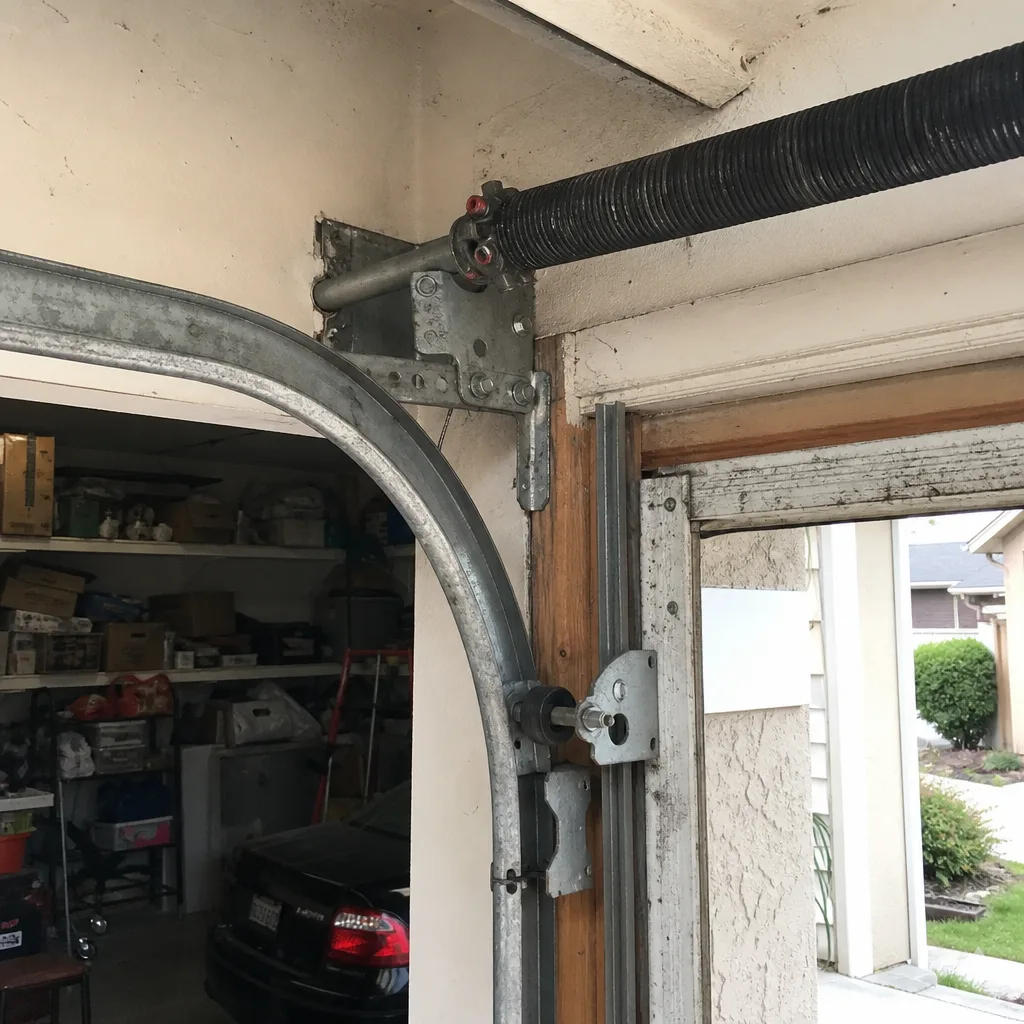
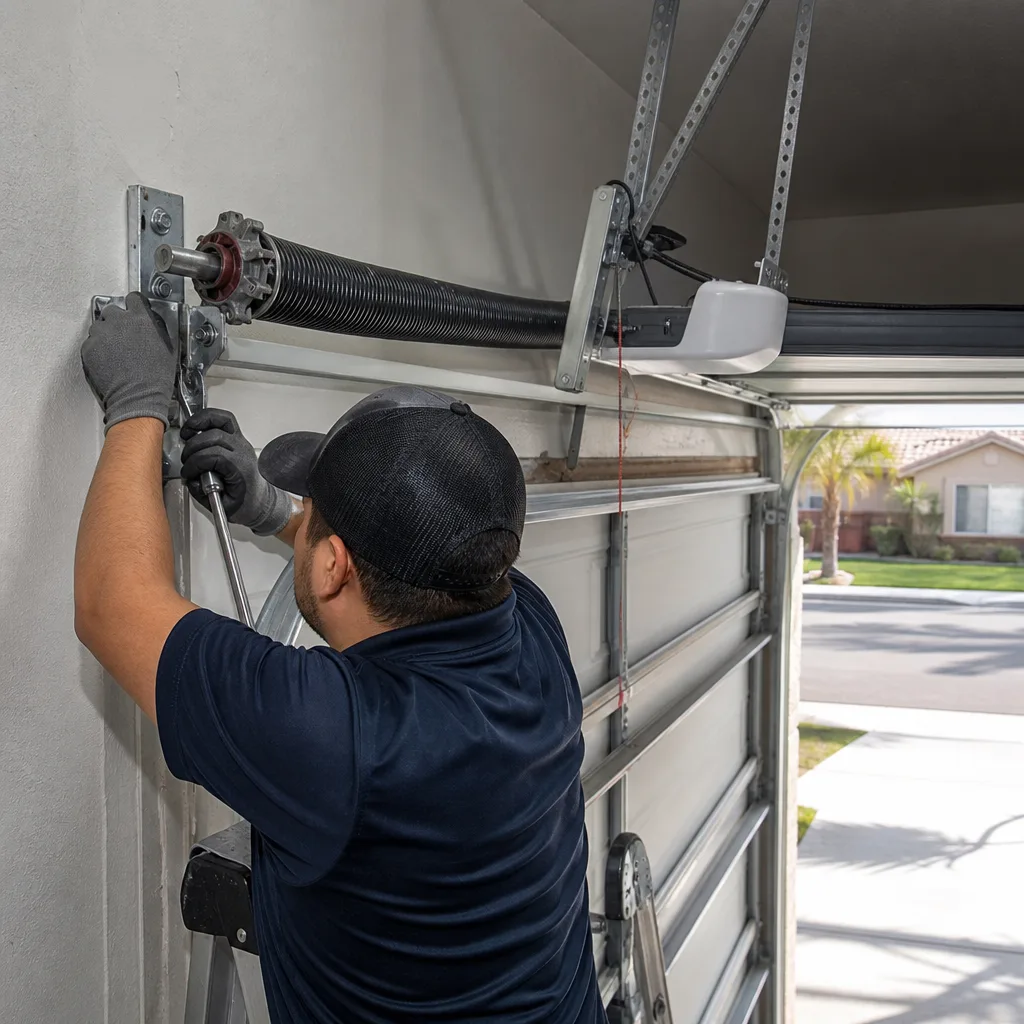
Torsion springs run horizontally above the door. Look for a gap in the coil - a space where the wire is no longer touching itself. A two-inch gap means the spring is broken. Even if the door still operates, it is running on the opener motor alone, which will burn out the gears in weeks.
Extension springs run along the horizontal tracks on each side. Look for stretched coils, rust flaking, or the safety cable sagging loose. The safety cable threads through the spring to contain it if it breaks. If the cable is slack, the spring has stretched beyond its design length and lost tension.
In Anaheim, we see accelerated rust on springs in homes near the Santa Ana River wash or with poor garage ventilation. Salt air from coastal pushes reaches inland during certain weather patterns. Rust pits the spring wire; pitted wire snaps under load.
The Cables
The lift cables run from the bottom bracket up to the drum. Look for fraying - individual wires separating from the strand like a split rope. Look for kinking, where the cable has been pinched and holds a sharp bend. Either condition means the cable is near failure. A broken cable lets one side of the door drop, jamming it in the tracks and often bending the bottom section.
Never touch a cable under tension. The stored energy can cause serious injury. Visual inspection from six feet away is safe and sufficient.
The Rollers
With the door closed, the rollers sit in the vertical track. Look for cracks in nylon rollers, flat spots where they no longer roll, or rust bleeding from steel rollers. Count the rollers: most doors have ten. If more than two show visible wear, replace the full set. Mixing new and worn rollers creates uneven travel that damages the tracks.
The Door Panels and Hardware
Look for rust at the bottom of steel doors, especially if water pools after washing the car or from sprinkler overspray. Look for cracks radiating from hinge holes in wood or composite doors. Look for bolts backing out of the track brackets - visible threads where the nut has migrated.
Check the weatherstrip at the bottom. If it is torn or hardened, debris enters the track. That debris jams rollers and bends track. In Anaheim’s dusty late-summer conditions, a compromised weatherstrip accelerates wear across the entire system.
Behavioral Warning Signs and Their Mechanical Causes
How the door moves tells you what is failing. These are the behavioral patterns we ask about on every service call.
Slow Response to the Remote or Wall Button
You press the button. The door waits two seconds, then moves. Or it moves at half speed. This is not “getting old.” It is a mechanical or electrical problem with a specific cause.
Slow start with normal speed after suggests a failing start capacitor in the opener. The capacitor stores the burst of current that starts the motor. When it weakens, the motor struggles to overcome initial inertia.
Uniformly slow travel suggests weak springs. The springs carry the door’s weight; the opener only guides it. When springs lose tension, the opener works harder and moves slower. This burns out the opener motor or strips the nylon drive gear. We replace far more openers that were killed by weak springs than openers that failed on their own.
Uneven Travel: One Side Higher Than the Other
The door rises with the left side leading by three inches, then levels out. Or it descends with the right side lagging. This is a spring tension imbalance, a frayed cable, or a seized roller on the low side.
The danger is progressive. The uneven load twists the door sections, cracks the hinges, and bends the tracks. A door that is three inches out of level today can be twelve inches out of level and jammed in a month. In our Garage Door Repair in Anaheim work, this is one of the most common calls from homeowners who waited too long.
Reversal Without Obstruction
The door reaches the floor and immediately reverses. Or it reverses three feet from the floor. The federal safety standard (UL 325) requires automatic reversal, but the trigger should be physical contact with an obstruction, not air.
Causes include:
- Misaligned safety sensors: The photo eyes at floor level are knocked out of alignment. The invisible beam breaks, and the opener reverses. Check the LED indicators on both sensors. Both should glow steady; flashing or dark means misalignment or wiring fault.
- Excessive close force: The opener’s down-force setting is too high. It crushes the door against the floor, triggers the internal load sensor, and reverses. This is common after a homeowner “fixes” a door that won’t close by cranking the force screw.
- Binding in the tracks: The door encounters resistance from a bent track or seized roller, the opener reads it as obstruction, and reverses. The binding location is usually where the vertical and horizontal tracks meet, the radius.
The Door Stops Mid-Travel
Mid-travel stops indicate thermal overload in the opener motor. The motor has an internal breaker that trips when overheated. Causes: weak springs forcing the motor to work harder, a door that is binding in the tracks, or an opener that is undersized for the door. A standard 1/2-horsepower opener struggles with a solid wood door or a door with failing springs. In Anaheim’s afternoon heat, thermal overload happens sooner because the motor starts warmer.
Manual Operation Feels Heavy
Disconnect the opener by pulling the red release handle. Lift the door manually to waist height. It should stay there. If it falls, the springs are weak. If you cannot lift it smoothly, a roller is seized or a cable is off the drum. This test tells you whether the problem is the door or the opener, and it is safe to perform.
How Anaheim’s Heat Changes the Warning Signs
Anaheim’s climate creates diagnostic patterns that homeowners in cooler regions do not see. Understanding these patterns prevents misreading the signals.
Morning Smooth, Afternoon Strain
The door operates quietly at 7 AM. By 3 PM, it grinds, reverses, or the opener overheats. This pattern almost always indicates a spring that has lost tension and is operating at the margin of failure.
Steel springs expand slightly in heat. A spring that is near its fatigue limit has less reserve tension. The morning cool provides just enough; the afternoon expansion and thermal load on the opener push it over the edge. When we get this description on the phone, we schedule same-week service. The spring has days, not weeks.
Seasonal Changes in Noise
A door that was silent in January develops squealing by July. This is lubrication breakdown accelerated by heat and dust. The grease thins and migrates; dust adheres to the remaining film, creating abrasive paste. Annual lubrication in late spring prevents this. Our $89 Seasonal Tune-Up - detailed in our Seasonal Garage Door Care for Anaheim: Year-Round Homeowner’s Guide - includes track cleaning, roller lubrication, and spring tension verification.
Opener Failure in August, Not February
We see a spike in opener motor failures in Anaheim during August and September. The garage ambient temperature reaches 95-105 degrees. The opener motor, already working harder if springs are weak, cannot shed heat. The thermal overload trips repeatedly, and eventually the motor windings fail. The warning sign is months of occasional mid-travel stops that become frequent. Homeowners who call in June avoid August emergencies.
Foundation Movement After Winter Rains
Anaheim’s brief winter rainy season saturates clay soils. They expand; the foundation shifts slightly. By May, the soils have dried and contracted. The garage door frame, which was plumb in March, is now out of square. The door scrapes, or the weatherstrip gaps. This is not door failure; it is structural settlement. But it requires track realignment and possibly header reinforcement to prevent the door from jumping track.
Coastal Air Inland
During certain Santa Ana wind patterns, marine air pushes inland to Anaheim. The moisture and salt accelerate corrosion on springs and cables. We see clusters of spring failures 7-10 days after these weather events, particularly in homes without sealed garages. If your springs showed surface rust before the weather event, the combination of existing pitting and salt exposure finishes them.
What to Monitor and What Demands Same-Week Service
Not every warning sign requires immediate dispatch. Some give you time to schedule conveniently, as covered in our How to Hire a Garage Door Contractor in Anaheim: A Step-by-Step Guide. Others will fail catastrophically if you wait.
Safe to Monitor for 30 Days
- Slight squealing that is consistent: Lubrication need. Schedule a tune-up at your convenience. Do not ignore beyond 30 days.
- Minor weatherstrip wear: Replace when you schedule other service. Not urgent unless debris is entering the track.
- Remote response delay under two seconds: Likely battery or range issue. Replace remote battery; if persists, opener logic board may be aging. Schedule within the month.
- Cosmetic rust on door panels: Address before it penetrates. Not a safety issue.
- One roller with visible wear, others fine: Plan replacement of full set within 30 days. Do not replace individually.
Demands Same-Week Service
- Any gap in a torsion spring: The spring is broken. The door is running on the opener alone. Continued operation destroys the opener and risks the door falling if the opener fails.
- Frayed or kinked cable: Cable failure is sudden and violent. The door drops on one side and jams. Often bends the bottom section or damages a vehicle.
- Grinding on ascent: The torsion drum is failing. Each cycle risks the cable jumping the drum and the door free-falling.
- Uneven travel that is worsening: The imbalance is twisting the door and bending tracks. The cost escalates weekly.
- Reversal that you cannot explain by sensor misalignment: Indicates force setting problems or binding that will worsen.
- Door that feels heavy in manual test: Springs are critically weak. The opener is next to fail.
In our experience, the homeowners who call for same-week service on these signs spend $180-340 for spring replacement or cable service. Those who wait spend $800-1,400 for opener replacement, door section replacement, and track repair. The math is straightforward.
Brand-Specific Patterns: LiftMaster, Genie, and Raynor
Different brands fail in characteristic ways. Knowing the pattern helps you interpret the warning sign correctly.
LiftMaster and Chamberlain
These are the most common openers in Anaheim homes built since 1995. The Garage Door Opener in Anaheim market is dominated by these brands, and for good reason: they are reliable when maintained.
The characteristic failure is the nylon drive gear in the opener head. It strips gradually, producing a loud grinding with little door movement. Homeowners often mistake this for a door problem. The warning sign is normal door movement when operated manually, but grinding and slow travel under opener power. The gear is replaceable, but many homeowners opt for opener replacement if the unit is over 12 years old. LiftMaster’s MyQ-enabled models add circuit board complexity; we see logic board failures after power surges, which Anaheim experiences during summer grid strain.
Genie
Genie screw-drive openers were popular in Anaheim’s 1980s and 1990s construction. The screw requires annual lubrication with specific low-temperature grease. Without it, the carriage (the traveler) strips the screw threads. The warning sign is a clicking sound and intermittent engagement. The screw is replaceable but often not economical. Genie’s chain-drive models are simpler and more durable; their warning signs are standard chain stretch and sprocket wear.
Raynor
Raynor doors are common in Anaheim Hills and the older Eichler-influenced tracts. The doors are well-built but use proprietary hinge and roller spacing on some models. The warning sign to watch is hinge cracking at the bolt holes, which is accelerated by the heavier gauge steel Raynor uses. When the hinge cracks, the door panel flexes independently, eventually creasing the panel. Caught early, hinge replacement is $45 per hinge. Late, it requires panel replacement or full door replacement if the model is discontinued.
Raynor’s relationship with Mainspring Garage Door Co. home service means we maintain factory familiarity with their current and legacy hardware. We stock the most common Raynor hinges and rollers on our trucks for single-visit completion.
Common Mistakes to Avoid
- Ignoring a sound because the door still works: Function does not equal health. A grinding drum or popping roller operates until it doesn’t, usually at the worst moment.
- Adjusting the opener force screws instead of fixing the door: When the door strains, homeowners turn up the opener force. This masks the underlying problem and burns out the opener motor. Fix the door; do not overpower it.
- Replacing only the broken spring: Torsion springs are installed in matched pairs. Replacing one creates imbalance that damages the door and the new spring. Always replace both.
- Using WD-40 on garage door components: WD-40 is a solvent, not a lubricant. It displaces the grease you need and attracts dust. Use white lithium grease or silicone spray on rollers and hinges.
- Assuming a slow door means the opener is failing: Nine times of ten, slow travel means weak springs. Replacing the opener without addressing springs guarantees the new opener will strain and fail early.
- Waiting for “both springs to go” before calling: This is a common misconception. The second spring is carrying double load and will fail soon. More importantly, the door is unbalanced and dangerous to operate.
- Not testing the safety reversal monthly: Place a 2×4 flat on the floor where the door closes. The door should reverse on contact. If it doesn’t, the force setting is too high or the safety system has failed. This is a federal safety requirement and a genuine hazard, especially with grandchildren visiting.
When to Call a Professional
Call when you observe any same-week warning sign listed above. Call when a sound or behavior is new and persistent. Call when you are unsure whether a sign is serious - we would rather inspect and reassure than repair after failure. For more guides & resources, visit our blog.
Specific scenarios that require professional service: any spring or cable condition, any grinding or popping sound, any door that has jumped the track, any opener that has stopped and will not reset after cooling, and any door that feels heavy in manual operation. These are not DIY projects. The stored energy in springs and cables can cause severe injury or death.
Mainspring Garage Door Co. offers free estimates in Anaheim. Our technicians arrive with springs, cables, rollers, and openers on the truck, so most jobs are completed in a single visit. The flat price is stated before any work begins. Call (714) 782-0297.
Frequently Asked Questions
Garage door spring replacement in Anaheim typically ranges from $180 to $340 for a standard two-car steel door, depending on spring size and whether the cables also need replacement. We state the flat price before any work begins, and every job is covered by our 90-Day Done Right Promise. Call (714) 782-0297 for an exact quote - estimates are free.
No. Torsion springs store lethal energy and require specialized winding tools and training. The Consumer Product Safety Commission attributes thousands of injuries annually to DIY spring work. We do not provide step-by-step instructions for spring replacement because the risk is genuine and unnecessary. Our background-checked technicians handle this safely, with the correct tools, in under an hour.
This pattern in Anaheim almost always indicates a torsion spring that has lost tension and is operating at its margin. The cooler morning temperature provides slightly more spring efficiency; afternoon heat expands the metal slightly and adds thermal load to the opener. The spring has days to weeks of life. Schedule service this week to avoid sudden failure.
Annually, ideally in late spring before Anaheim’s summer heat accelerates wear. Our $89 Seasonal Tune-Up includes spring tension verification, roller and hinge inspection, track alignment check, opener force and safety reversal testing, and lubrication of all moving parts. Senior and veteran homeowners receive a permanent 5% discount.
No. We quote the flat price after inspection and before work begins. If we discover additional issues, we explain them and quote separately. You approve every dollar before we proceed. No surprises on the bill. That is our promise, and it is in writing on every job.
Yes. Our trucks are stocked with torsion and extension springs, cables, rollers, hinges, weatherstrip, and openers from LiftMaster, Chamberlain, Genie, and major door manufacturers. Most repairs are completed in a single visit. If you have a Raynor, Clopay, or other brand with proprietary hardware, mention it when you call so we confirm stock.
The Bottom Line
Your garage door speaks before it fails. The grinding, the pop, the afternoon strain, the slight lean as it rises - these are not quirks of age. They are specific mechanical signals with specific causes and timelines. Learning to read them saves you from the inconvenience of a trapped vehicle, the security risk of an open garage, and the cost of cascade failures that multiply the repair bill.
In Anaheim’s climate, heat accelerates what time begins. The homeowner who notices a warning sign in March and calls for a tune-up spends $89. The one who waits until August spends ten times that. We have seen this pattern for 42 years. The door tells you what it needs. The only question is whether you are listening.
If you are unsure what your door is telling you, call us. We will diagnose it honestly, quote it flat, and fix it right the first time. That is the Mainspring way.
Written by Carl Dutton, Owner at Mainspring Garage Door Co., serving Anaheim since 2016.